
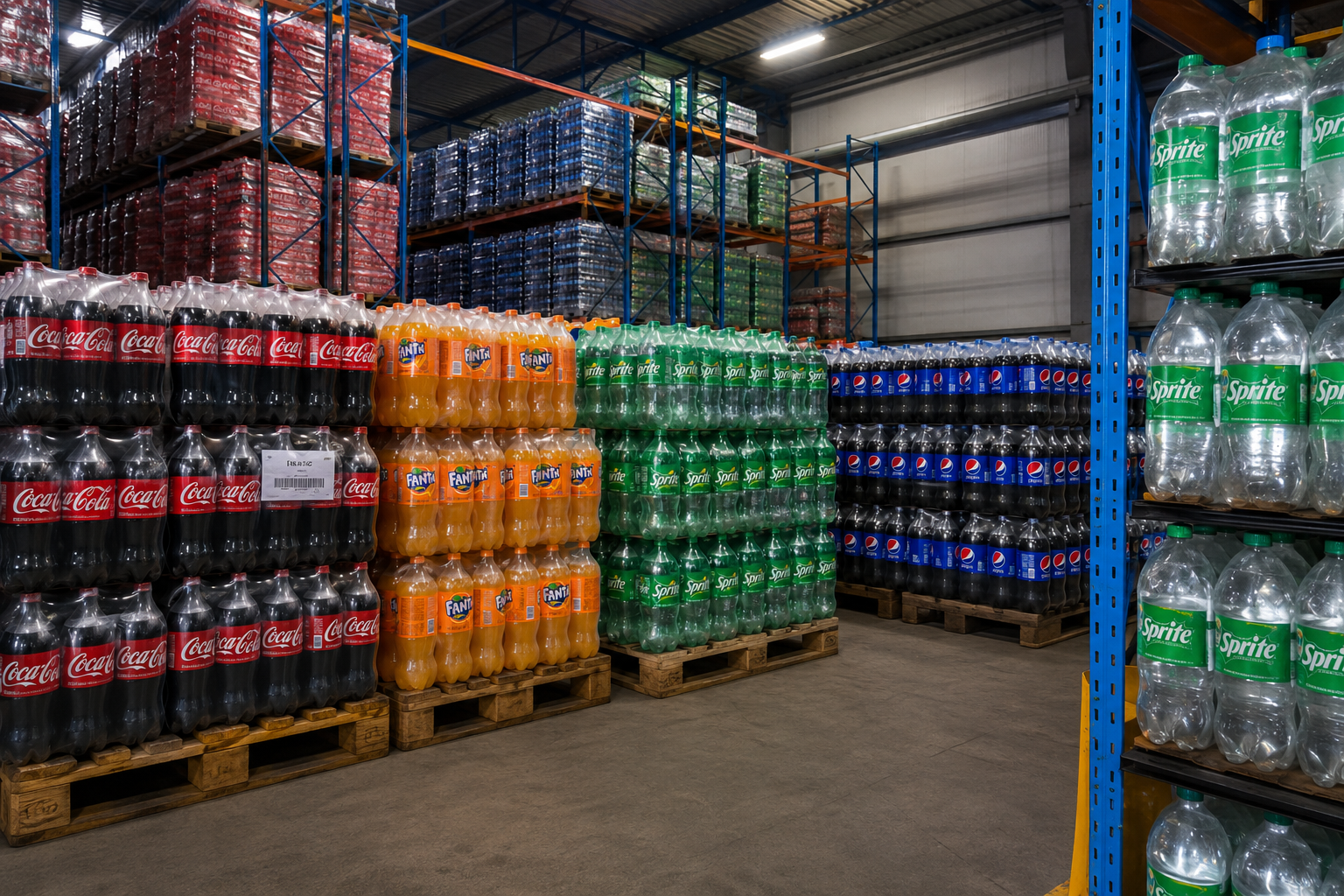
The European beverage industry has entered a period where procurement decisions are increasingly shaped by supply chain performance rather than price alone. For wholesalers, importers, retailers, and hospitality operators, the ability to secure consistent product availability, manage logistics complexity, and respond quickly to market changes has become a strategic requirement.
The growth of Soft Drinks Export from Germany reflects this broader transformation. Germany’s position as one of Europe’s largest beverage markets, combined with its established manufacturing base, advanced logistics infrastructure, and central geographic location, has made it an important sourcing hub for international beverage buyers.
However, modern beverage procurement involves more than identifying a supplier with competitive pricing. Buyers must evaluate production reliability, export documentation, pallet efficiency, inventory planning capabilities, and the ability to coordinate cross-border deliveries across multiple markets.
For procurement teams, the key question has shifted from “Who offers the lowest unit price?” to “Which supply partner can protect operational continuity while maintaining commercial flexibility?”
This shift is reshaping European beverage distribution networks and changing how businesses evaluate wholesale beverage suppliers.
European Beverage Market Overview: Germany’s Role in Cross-Border Beverage Trade
Germany plays a significant role in European FMCG supply chains due to its manufacturing capacity, transport infrastructure, and access to neighbouring markets. Its location provides efficient connections to major consumer markets across the European Union, including Central Europe, Western Europe, and emerging export destinations.
The European beverage market includes multiple segments, from carbonated soft drinks and energy drinks to functional beverages, bottled water, and private-label products. While consumer preferences continue to evolve, procurement teams face a common challenge: ensuring reliable supply across increasingly complex product portfolios.
According to Eurostat, the European Union operates as one of the world’s largest trading regions, with extensive internal and external goods movement supported by integrated logistics networks. These trade connections allow beverage companies to build international distribution models but also increase the importance of compliance, documentation accuracy, and transport coordination.
Eurostat provides statistical frameworks that help businesses understand European trade flows, industrial activity, and market structures.
The role of Germany within this system extends beyond manufacturing. German-based beverage suppliers often serve as consolidation points for international buyers seeking access to established brands, reliable production standards, and efficient European distribution channels.
For international buyers, sourcing from Germany can provide advantages such as:
- access to established beverage manufacturers
- proximity to major European transport corridors
- structured export processes
- established FMCG logistics networks
- opportunities for mixed product sourcing
However, these advantages only create value when supported by effective procurement management and dependable supply chain execution.
The Procurement Challenges Reshaping Wholesale Beverage Distribution
Supply Reliability Has Become a Core Purchasing Criterion
Traditional beverage procurement often focused heavily on product price, brand availability, and payment terms. Today, procurement managers increasingly assess suppliers based on operational reliability.
A delayed shipment of soft drinks can create consequences far beyond transportation issues. Retailers may experience empty shelves, wholesalers may lose customer confidence, and hospitality businesses may face disruptions during peak demand periods.
Several factors contribute to supply instability:
- production scheduling challenges
- raw material availability
- packaging shortages
- inaccurate demand forecasting
- transport capacity constraints
- documentation problems
For a beverage importer or distributor, these issues can affect profitability even when purchasing prices appear attractive.
A supplier that consistently delivers on time, provides accurate documentation, and communicates effectively can create measurable operational advantages.
Documentation and Compliance Are Increasingly Important
Cross-border beverage trade requires accurate handling of commercial documents, customs information, product specifications, and regulatory requirements.
Errors in documentation can delay shipments, create additional administrative costs, or interrupt delivery schedules.
For companies involved in Soft Drinks Export from Germany, export readiness is not simply a legal requirement—it is a commercial capability. Professional suppliers must coordinate effectively with customs authorities, logistics providers, warehouses, and buyers.
The European Commission provides information on customs procedures and trade requirements that affect companies moving goods across EU borders and international markets.
European Commission Procurement teams increasingly evaluate suppliers according to their ability to manage these processes efficiently.
Why Traditional Supplier Selection Is No Longer Enough
Price-Based Purchasing Creates Hidden Operational Costs
Selecting suppliers purely on purchase price can overlook important cost factors throughout the supply chain.
A lower product price may be offset by:
- inconsistent delivery schedules
- higher storage requirements
- emergency purchasing
- inefficient pallet configurations
- increased administrative workload
- reduced retailer service levels
The total cost of beverage procurement includes more than the invoice price. It includes logistics performance, inventory requirements, handling efficiency, and supply reliability.
This is why many professional buyers now assess suppliers through a broader framework that considers operational performance alongside commercial terms.
A reliable beverage wholesaler or beverage distributor must demonstrate competence across sourcing, documentation, logistics coordination, and inventory planning.
Supplier Evaluation Is Becoming More Data-Driven
Modern procurement departments increasingly use structured supplier evaluation processes.
Common evaluation criteria include:
| Evaluation Area | Procurement Consideration |
|---|---|
| Product availability | Can demand fluctuations be managed? |
| Delivery performance | Are shipment schedules reliable? |
| Documentation accuracy | Are export processes handled correctly? |
| Product range | Can multiple categories be sourced efficiently? |
| Communication | Are issues resolved quickly? |
| Logistics capability | Can pallet distribution be optimized? |
For international buyers, working with a capable wholesale soft drinks supplier can reduce supply chain complexity by combining product access with export coordination expertise.
Characteristics of Reliable Wholesale Beverage Supply Chains
Flexible Inventory Management
Beverage demand is influenced by seasonality, promotions, consumer trends, and regional preferences.
A strong FMCG beverage supply system requires accurate forecasting and flexible inventory planning.
Companies that maintain excessive inventory may increase storage costs, while insufficient stock can create missed sales opportunities.
Professional suppliers increasingly support buyers through:
- demand planning discussions
- stock visibility
- production coordination
- shipment scheduling
- category insights
Efficient Pallet Beverage Distribution
Transportation efficiency has become a major consideration in beverage logistics.
Because beverages are high-volume products, pallet configuration, warehouse handling, and transport planning directly influence profitability.
Factors affecting pallet efficiency include:
- product dimensions
- packaging format
- loading methods
- warehouse capabilities
- destination requirements
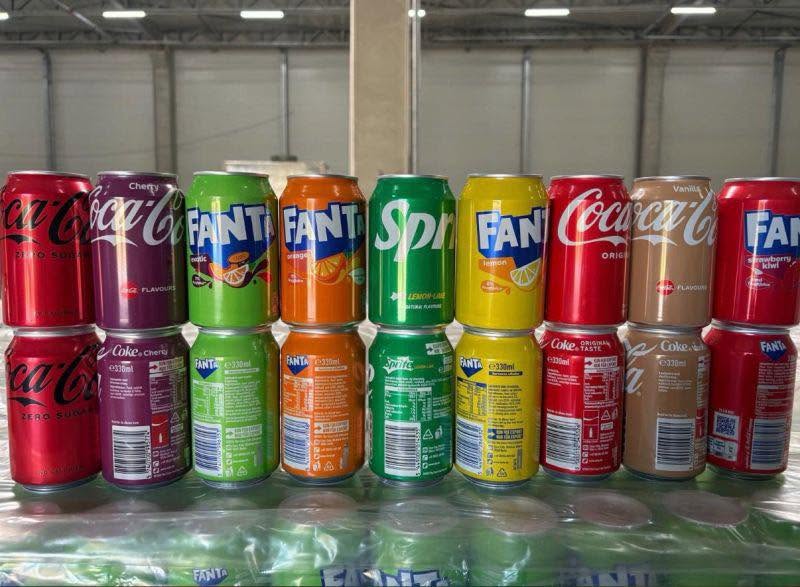
Mixed pallet solutions are becoming increasingly relevant for buyers managing diverse product portfolios. They allow wholesalers and retailers to combine multiple beverage categories within a single shipment, improving flexibility for regional markets.
Transparent Communication Between Supply Chain Partners
Supply chain resilience depends heavily on information flow.
A supplier that communicates production schedules, potential delays, and inventory limitations allows buyers to adjust their planning before problems occur.
In contrast, limited visibility creates reactive purchasing decisions and increases operational pressure.
Hidden Operational Risks Buyers Commonly Miss
Forecasting Errors and Inventory Imbalance
One of the most underestimated challenges in beverage procurement is inaccurate forecasting.
Demand patterns can change quickly due to:
- seasonal consumption
- promotional campaigns
- regional preferences
- economic conditions
- emerging beverage categories
Poor forecasting can create two opposite problems: excess inventory or product shortages.
Effective beverage inventory management requires combining historical sales information with market intelligence.
Logistics Bottlenecks
Transport capacity, warehouse availability, and route planning all influence delivery performance.
The complexity increases when shipments cross multiple borders or involve different logistics providers.
For international beverage buyers, supply chain visibility becomes essential.
Digital tracking systems, warehouse management platforms, and automated communication tools are increasingly used to improve transparency.
Supplier Network Fragmentation
Many businesses rely on multiple suppliers to access different beverage categories. While diversification can reduce dependency risks, excessive fragmentation creates additional complexity.
Managing numerous suppliers can increase:
- administrative workload
- documentation requirements
- quality monitoring challenges
- coordination costs
Strategic supplier consolidation is therefore becoming a priority for many FMCG procurement teams.
Market Trends Reshaping Beverage Procurement
Growth of Digital Procurement Systems
Digital transformation is changing how beverage buyers interact with suppliers.
Procurement platforms increasingly support:
- automated ordering
- supplier performance tracking
- demand forecasting
- inventory analysis
- documentation management
These systems allow companies to make purchasing decisions based on real-time information rather than historical assumptions.
Sustainability and Supply Chain Transparency
Environmental considerations are becoming more influential in European FMCG supply chains.
Retailers and consumers increasingly expect companies to understand the environmental impact of packaging, transportation, and production processes.
For beverage companies, sustainability discussions increasingly involve:
- packaging materials
- transport efficiency
- production processes
- supply chain reporting
Rather than being a separate initiative, sustainability is becoming connected with operational efficiency.
Changing Retail Expectations
Supermarkets, convenience chains, and hospitality operators increasingly require suppliers that can support:
- reliable availability
- faster replenishment
- wider product selection
- accurate delivery performance
This is creating pressure across the beverage supply chain, from manufacturers to distributors.
Future Outlook: The Next Generation of Beverage Supply Chains
AI-Assisted Procurement and Predictive Planning
Artificial intelligence is expected to influence beverage procurement through improved forecasting, supplier analysis, and inventory planning.
AI-supported systems can help companies identify purchasing patterns, anticipate demand changes, and detect potential supply risks earlier.
The value of AI will depend less on automation alone and more on how effectively companies integrate data into daily procurement decisions.
Digital Logistics Networks
Future beverage distribution models are likely to rely on stronger digital connectivity between manufacturers, wholesalers, transport providers, and retailers.
Greater supply chain visibility can help businesses:
- reduce delays
- improve delivery planning
- optimise inventory levels
- coordinate international shipments
Evolution of Mixed Distribution Models
As retailers and wholesalers manage more product variety, flexible distribution models are likely to become increasingly important.
Mixed pallets, regional consolidation centres, and technology-supported warehouse operations may become standard tools for managing diverse beverage categories.
Cross-Border European Trade Expansion
The European beverage market will continue to depend heavily on efficient cross-border movement of goods.
However, future competitiveness will depend on balancing cost efficiency with resilience.
Businesses that build adaptable supply chains will be better positioned to manage market uncertainty, changing regulations, and evolving consumer demand.
Strategic Recommendations for Procurement Teams
For beverage buyers evaluating suppliers, several strategic priorities are becoming increasingly important:
Evaluate Operational Capability, Not Only Pricing
A supplier’s ability to deliver consistently should be considered alongside commercial terms.
Strengthen Supplier Relationships
Long-term collaboration can improve forecasting, communication, and supply planning.
Improve Data Visibility
Better information enables faster and more accurate purchasing decisions.
Optimise Logistics Planning
Pallet efficiency, transport coordination, and warehouse planning directly influence profitability.
Reduce Unnecessary Supply Chain Complexity
A balanced supplier network can provide flexibility without creating excessive administrative challenges.
Conclusion: From Price Competition to Supply Chain Resilience
The future of European beverage wholesale will be shaped less by simple price competition and more by operational reliability.
The importance of Soft Drinks Export from Germany reflects a broader industry shift: beverage procurement is becoming a strategic supply chain function rather than a transactional purchasing activity.
For wholesalers, retailers, and international buyers, the strongest supplier relationships will be built around consistency, transparency, logistics capability, and adaptability.
As European beverage distribution networks continue to evolve, companies that prioritise supply chain resilience will be better positioned to manage complexity, protect availability, and compete effectively in increasingly demanding markets.