Table of Contents
Finding a reliable European beverage exporter is an important commercial decision for importers, wholesalers, distributors, supermarkets and hospitality businesses.
The right exporter does more than supply drinks. It confirms product availability, prepares stable pallets, provides accurate documentation, coordinates transportation and helps the buyer understand the responsibilities attached to the chosen delivery terms.
The wrong supplier can create costly problems. These may include incorrect products, incomplete documentation, short shelf life, unsuitable labelling, delayed dispatch, unexpected destination charges or damaged pallets.
European beverage sourcing can offer access to established soft drink brands, energy drinks, bottled water, juices and other fast-moving products. However, buyers must evaluate the entire supply process rather than comparing product prices alone.
This guide explains what a European beverage exporter does, which businesses use these services, how products are prepared for international distribution, and what buyers should verify before placing an order.
What Is a European Beverage Exporter?
A European beverage exporter is a business that supplies beverages from one or more European markets to commercial buyers in other countries.
The exporter may operate as:
- A beverage wholesaler
- An authorized or independent distributor
- An FMCG trading company
- An import and export company
- A warehouse-based supplier
- A sourcing and consolidation business
- A manufacturer exporting its own products
Its role may include sourcing products, confirming specifications, preparing pallets, issuing commercial documents and coordinating with freight forwarders or customs representatives.
Some exporters control their own warehouse inventory. Others source products from manufacturers, authorized distributors or established wholesale channels after receiving a confirmed order.
The buyer should understand which model the supplier uses because it can affect stock availability, preparation time, price stability and minimum order quantities.
What Does a European Beverage Exporter Do?
The exact service varies between companies, but a professional exporter may handle several stages of the supply chain.
Product sourcing
The exporter identifies suitable products based on the buyer’s requested:
- Brand
- Flavour
- Package size
- Units per case
- Quantity
- Target market
- Remaining shelf life
- Required delivery date
Wholesale order preparation
Products may be prepared as:
- Full single-product pallets
- Mixed-brand pallets
- Mixed-flavour pallets
- Full truckloads
- Less-than-truckload shipments
- Full shipping containers
- Consolidated sea-freight shipments
Export packaging
The exporter may arrange:
- Palletization
- Stretch wrapping
- Corner protection
- Pallet labels
- Case-count verification
- Load stabilization
- Shipping marks
- Loading photographs
Commercial documentation
Depending on the transaction, documentation may include:
- Commercial invoice
- Packing list
- Proforma invoice
- Delivery note
- Transport documentation
- Export declaration
- Origin documentation
- Insurance documentation
- Product specifications
Logistics coordination
A beverage exporter may work with road carriers, freight forwarders, shipping lines, customs representatives and warehouse operators.
The precise responsibility depends on the sales contract and selected Incoterm. The official ICC Incoterms 2020 rules define important buyer and seller responsibilities concerning delivery, transportation, risk and certain customs formalities.
Why Businesses Source Beverages from Europe
European beverage markets offer access to a broad range of branded and private-label products.
Commercial buyers may source from Europe to:
- Expand their existing product catalogue
- Access European brand variants
- Purchase several beverage categories through one supplier
- Secure full or mixed pallets
- Consolidate products for international transport
- Support supermarket or retail distribution
- Maintain stock for hospitality customers
- Develop a repeat wholesale supply arrangement
Europe also contains extensive road, rail, port and intermodal freight networks. This allows exporters to arrange different transportation methods depending on volume, destination and urgency.
However, the availability of a transport route does not guarantee that a product can be imported or sold legally in the destination country. Buyers must confirm customs, tax, food-information and packaging requirements before shipment.
The European Commission’s Access2Markets portal helps businesses research tariffs, trade agreements, rules of origin and product-specific trading conditions for many markets.
Who Buys from European Beverage Exporters?
European beverage exporters serve different types of commercial buyers.
Importers
Importers purchase products from Europe and complete the requirements needed to bring them into their home country.
Their responsibilities may include:
- Import registration
- Customs clearance
- Duty and tax payment
- Local regulatory compliance
- Product labelling
- Warehousing
- Domestic distribution
Beverage wholesalers
Wholesalers buy products in larger quantities and resell them to retailers, hospitality businesses, independent shops and regional distributors.
They often prioritize:
- Competitive landed cost
- Consistent stock
- Long remaining shelf life
- Full-pallet availability
- Reliable documentation
- Predictable delivery schedules
Distributors
Distributors may supply supermarkets, convenience stores, restaurants, hotels, cafés and vending operators.
They generally need dependable stock rotation and accurate product identification because each shipment may be divided among several customers.
Retail groups
Supermarket and convenience-store operators may purchase directly when the quantities justify international procurement.
Retail buyers commonly evaluate:
- Consumer demand
- Retail margin
- Packaging language
- Product registration
- Barcode compatibility
- Shelf presentation
- Deposit obligations
- Remaining shelf life
Hospitality businesses
Hotels, restaurants, catering companies and entertainment venues may work with importers or wholesalers to source branded beverages for resale and service.
Their purchases may include soft drinks, energy drinks, juices, mixers, sparkling water and still water.
Online beverage retailers
E-commerce businesses may use exporters to obtain products not commonly available in their domestic market.
They must still comply with local product-information, tax, consumer-protection and packaging requirements.
Which Beverages Can Be Exported from Europe?
The available range depends on the supplier, country, stock position and destination regulations.
Carbonated soft drinks
Frequently requested products include:
- Cola beverages
- Orange-flavoured drinks
- Lemon-lime drinks
- Tonic water
- Ginger ale
- Flavoured carbonated drinks
- Sugar-free soft drinks
Common packaging formats include:
- 250ml cans
- 330ml cans
- 500ml cans
- 500ml bottles
- 1-litre bottles
- 1.5-litre bottles
- 2-litre bottles
Energy drinks
Energy drinks are often purchased by convenience stores, gyms, night-time venues, service stations and independent retailers.
Buyers should verify:
- Can size
- Caffeine information
- Sugar or sweetener content
- Flavour
- Language
- Required warnings
- Best-before date
- Packaging configuration
Bottled water
A European beverage exporter may supply:
- Still water
- Sparkling water
- Mineral water
- Flavoured water
- Premium glass-bottle water
- Sports-cap water
Because bottled water is heavy relative to its product value, transport efficiency plays a major role in the final landed cost.
Juices and juice drinks
The category may include:
- Fruit juice
- Juice blends
- Nectars
- Juice drinks
- Smoothies
- Children’s juice products
The buyer should distinguish between these product types because composition, classification and labelling can differ.
Functional and sports beverages
Some exporters also supply:
- Isotonic drinks
- Electrolyte beverages
- Vitamin drinks
- Protein drinks
- Recovery beverages
Claims involving nutrition or health may be regulated. Buyers should confirm whether the existing packaging and claims are permitted in the destination market.
Mixers and hospitality beverages
Hospitality-focused orders may contain:
- Tonic water
- Soda water
- Ginger beer
- Bitter lemon
- Flavoured mixers
- Premium carbonated beverages
These products may be supplied in cans, plastic bottles or glass bottles depending on the brand and intended market.
Branded Beverages Versus Private-Label Products
Buyers must decide whether to prioritize established brands or private-label products.
| Factor | Branded beverages | Private-label beverages |
|---|---|---|
| Consumer recognition | Usually higher | Must be developed |
| Marketing support | Often supported by existing awareness | Buyer normally creates the positioning |
| Order flexibility | Depends on available wholesale stock | Production minimums may apply |
| Packaging control | Limited | Greater customization may be possible |
| Lead time | Can be shorter when stock is available | Production time is normally required |
| Price structure | Influenced by brand and market demand | Depends on formulation, packaging and volume |
| Regulatory preparation | Existing label may still require review | Label can be designed for the target market |
| Exclusivity | Usually limited | May be negotiated |
Branded beverages may be easier to introduce where customers already recognize the product.
Private-label supply can offer stronger control over packaging and market positioning, but it typically requires higher order quantities, product development and longer lead times.
How to Evaluate a European Beverage Exporter
Supplier evaluation should begin before requesting bank details or making payment.
Verify the legal business identity
Confirm:
- Registered company name
- Business address
- Registration details
- VAT number, where applicable
- Official telephone number
- Company email domain
- Bank-account beneficiary
- Quotation issuer
- Invoice issuer
The names appearing on the company documents and payment instructions should be consistent.
Any difference should be explained and independently verified.
Confirm the exporter’s operational model
Ask whether the company:
- Holds stock in its own warehouse
- Sources after order confirmation
- Works through partner warehouses
- Consolidates products from several suppliers
- Uses third-party fulfilment
- Exports directly or through a logistics partner
This information helps the buyer understand possible preparation times and stock risks.
Request exact product information
A serious exporter should be able to provide:
- Product name
- Flavour or version
- Can or bottle size
- Units per case
- Cases per pallet
- Pallet dimensions
- Gross pallet weight
- Barcode or GTIN
- Market version
- Best-before date or minimum shelf life
- Available quantity
Avoid purchasing based on a product photograph alone.
Check traceability procedures
Product traceability allows businesses to connect stock to batch, shipment and supplier records.
The GS1 Global Traceability Standard assists organizations in designing and implementing traceability systems across supply chains.
A beverage exporter should retain information that helps identify:
- The supplied product
- The relevant batch
- The source of the goods
- The buyer receiving them
- The shipment date
- The pallet or logistics unit
Traceability is especially important when products are divided among several retailers or when a complaint, withdrawal or recall must be investigated.
Product Labelling Must Match the Destination Market
A beverage legally sold in one European country may still need review before being distributed in another market.
The EU’s food-information framework requires mandatory information to be accurate and understandable. The European Commission explains that food-labelling rules are intended to provide consumers with information about a product’s content and composition.
Within the EU, mandatory food information must appear in a language easily understood by consumers in the member state where the product is marketed. Individual member states may specify which EU languages satisfy this requirement in their territory.
Depending on the product and destination, checks may include:
- Product name
- Ingredient list
- Allergen information
- Nutrition declaration
- Net quantity
- Best-before date
- Storage conditions
- Responsible operator
- Sweetener statements
- Caffeine warnings
- Recycling information
- Deposit markings
- Importer details
For exports outside the EU, the importer should verify the destination country’s requirements with its food authority, customs administration or qualified regulatory adviser before dispatch.
Expert Insight: Price Alone Does Not Identify the Best Exporter
An unusually low wholesale price may appear attractive, but it should not be evaluated separately from the rest of the transaction.
A commercially reliable quotation should also confirm:
- Exact product version
- Quantity
- Cases per pallet
- Remaining shelf life
- Product origin
- Market packaging
- Freight arrangement
- Incoterm
- Documentation
- Insurance
- Destination charges
- Dispatch period
- Payment conditions
The best European beverage exporter is not necessarily the company offering the lowest case price. It is the supplier capable of delivering the correct products, in acceptable condition, with accurate documentation and clearly allocated responsibilities.
Choosing the Right Pallet Configuration
One of the first operational decisions when working with a European beverage exporter is determining how your products will be packed and shipped.
The pallet configuration influences transportation costs, warehouse efficiency, inventory management and the overall landed cost of your shipment.
Although pallet layouts differ by product, packaging format and supplier, buyers generally choose between full pallets and mixed pallets.
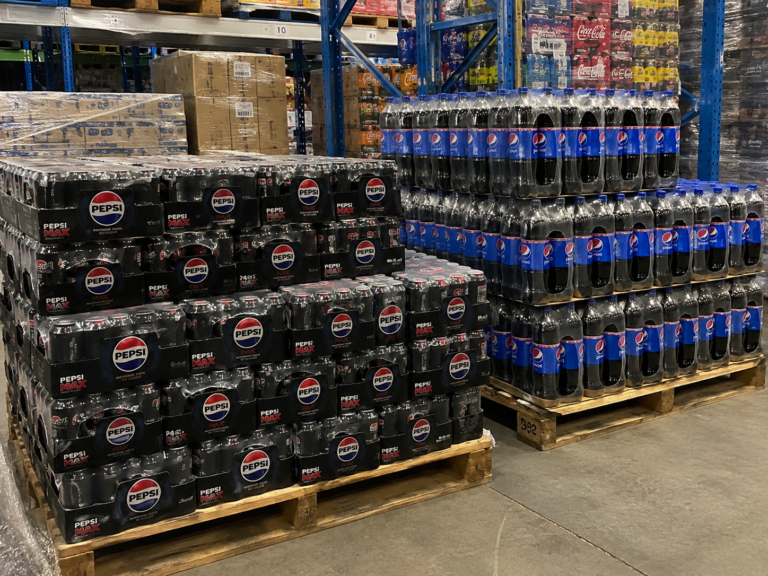
Full Pallets
A full pallet contains a single product with the same packaging format throughout the pallet.
For example:
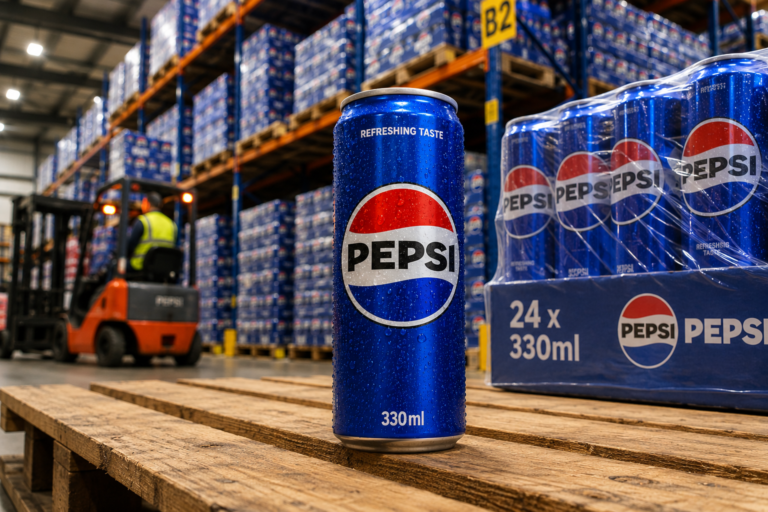
- Coca-Cola 330ml cans
- Pepsi 330ml cans
- Sprite 500ml PET bottles
- Fanta Orange 1.5L bottles
Full pallets are commonly preferred because they:
- simplify warehouse handling
- reduce picking errors
- improve pallet stability
- speed up loading and unloading
- make inventory counting easier
- reduce handling costs
For established distributors with predictable demand, full pallets often provide the most efficient logistics solution.
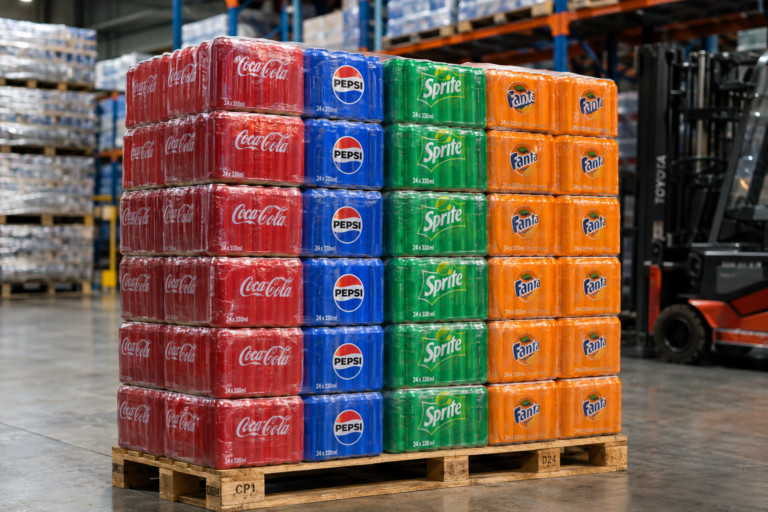
Mixed Pallets
Mixed pallets contain several products on one pallet.
For example:
- Coca-Cola
- Coca-Cola Zero Sugar
- Fanta Orange
- Sprite
- Pepsi
- Pepsi Max
Mixed pallets help businesses:
- test market demand
- supply smaller retailers
- expand product variety
- reduce inventory risk
- introduce new products
However, mixed pallets usually require more warehouse preparation and may increase handling costs.
Businesses considering this option can also review the related guide on Mixed Pallet Distribution to understand how mixed orders affect logistics and procurement.
Requesting a Professional Wholesale Quotation
A wholesale quotation should contain enough information for the buyer to calculate the true purchasing cost.
It should clearly specify:
- Seller information
- Buyer information
- Quotation number
- Issue date
- Validity period
- Product descriptions
- Package sizes
- Cases per pallet
- Number of pallets
- Unit prices
- Total product value
- Freight charges
- Insurance (where applicable)
- Delivery term
- Currency
- Payment conditions
- Estimated dispatch time
Professional quotations reduce misunderstandings and allow buyers to compare suppliers objectively.
Avoid quotations that only provide a total amount without identifying the products and services included.
Understanding the Total Landed Cost
The product price represents only one part of the overall purchasing cost.
Successful importers calculate the total landed cost before placing an order.
Typical cost components include:
| Cost | Description |
|---|---|
| Product value | Wholesale beverage price |
| Export packaging | Pallets, wrapping and labels |
| Warehouse handling | Picking and loading |
| Inland transport | Warehouse to terminal |
| Export customs | Export declaration |
| International freight | Road, sea, rail or air |
| Cargo insurance | Transit protection |
| Destination charges | Terminal handling |
| Customs duty | Destination tariff |
| Import taxes | VAT or local taxes |
| Customs broker | Clearance services |
| Local delivery | Terminal to warehouse |
The landed cost provides a more accurate basis for resale pricing than the supplier’s product price alone.
Selecting the Appropriate Incoterm
Incoterms define the responsibilities shared between buyers and sellers during international trade.
They determine:
- delivery location
- transportation responsibilities
- transfer of risk
- customs obligations
- freight payment
The official Incoterms 2020 Rules published by the International Chamber of Commerce explain each trade term in detail:
The most frequently used terms in beverage exports include:
| Incoterm | Typical Application |
|---|---|
| EXW | Collection from supplier |
| FCA | Delivery to nominated carrier |
| CPT | Seller pays carriage |
| CIP | Seller pays carriage and insurance |
| FOB | Sea freight loading |
| CFR | Sea freight paid |
| CIF | Sea freight plus insurance |
| DAP | Delivered to destination |
| DDP | Delivered duty paid |
Always include the named place.
Example:
FCA Leipzig, Germany – Incoterms® 2020
Avoid writing only “FCA” or “DAP.”
Export Documentation
Accurate documentation supports customs clearance and international transportation.
Typical export documents include:
- Commercial Invoice
- Packing List
- Transport Document
- Export Declaration
- Certificate of Origin (where required)
- Insurance Certificate
- Product Specifications
The European Commission explains export documentation requirements through its Access2Markets portal:
Always verify which documents are required for your destination country before dispatch.
Customs Classification
Every beverage shipment should be classified correctly.
The customs code influences:
- customs duty
- import taxes
- documentation
- product restrictions
- statistical reporting
German Customs provides information about customs tariff classification:
https://www.zoll.de/EN/Home/home_node.html
Incorrect classification may delay customs clearance or result in incorrect duty calculations.
Transportation Options
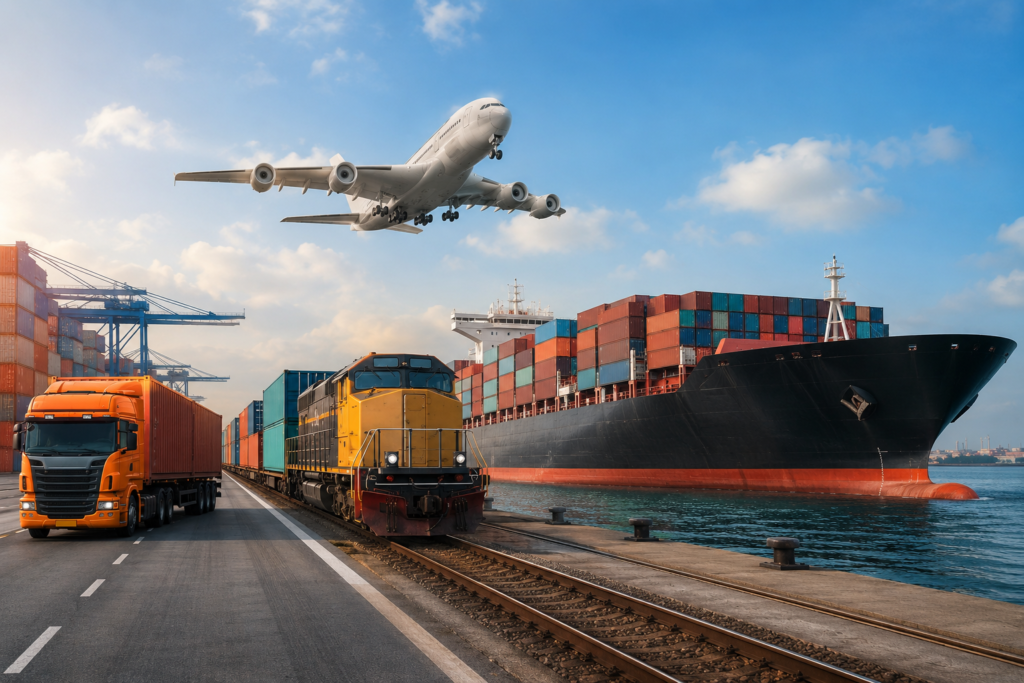
European beverage exporters commonly offer several transportation methods depending on shipment size and destination.
Road Freight
Suitable for European deliveries.
Options include:
- Full Truck Load (FTL)
- Less Than Truck Load (LTL)
- Groupage
Road transport offers flexible delivery schedules and efficient regional distribution.
Sea Freight
Often used for overseas customers.
Available options include:
- Full Container Load (FCL)
- Less than Container Load (LCL)
Sea freight is generally more economical for large shipments but usually requires longer transit times.
Rail Freight
Rail may be suitable for certain European and intercontinental routes where established freight corridors exist.
Air Freight
Air transport is the fastest option but is usually reserved for urgent, high-value or lightweight shipments due to higher transportation costs.
Multimodal Transport
Many international beverage shipments combine several transport methods.
For example:
Warehouse → Truck → Port → Container Ship → Truck → Customer Warehouse
This approach helps optimize cost and delivery efficiency across long distances.
Protecting Beverage Shipments
Beverages are heavy products that require secure handling.
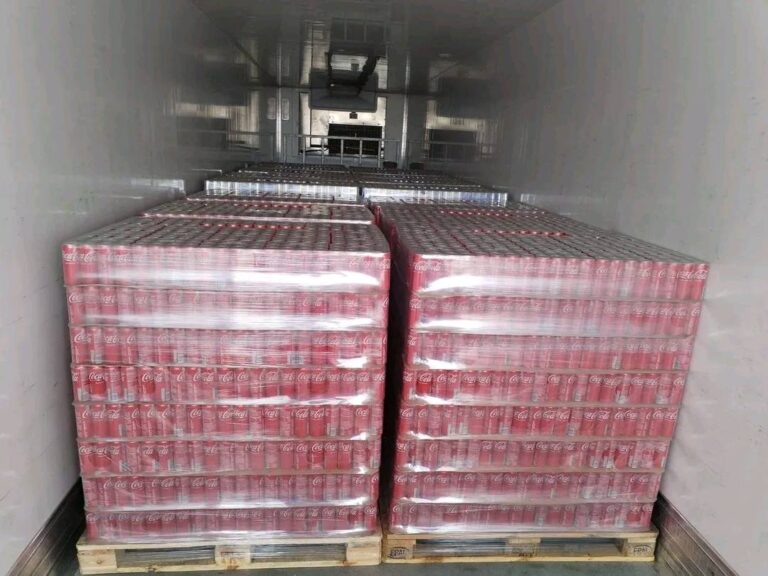
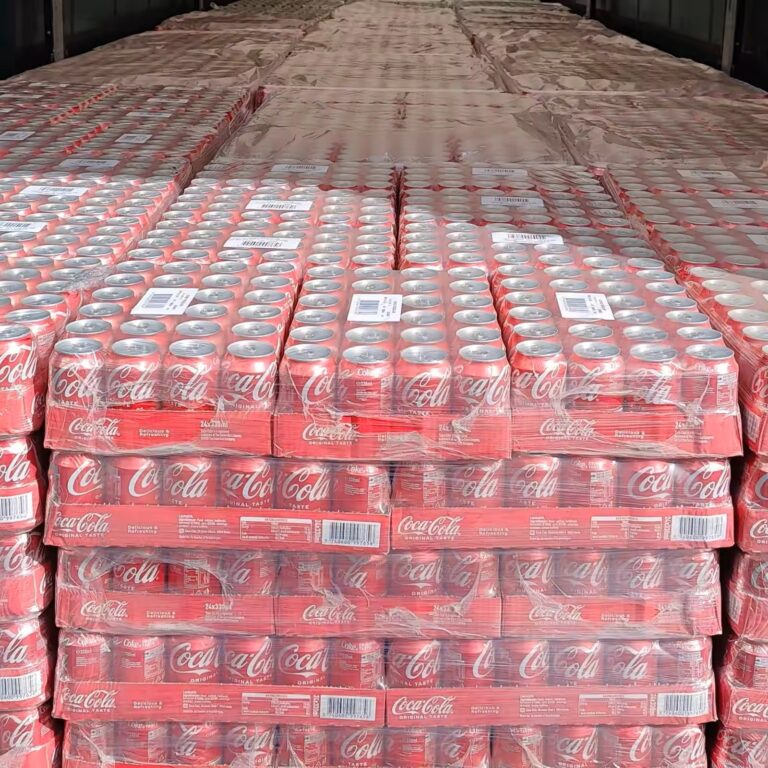
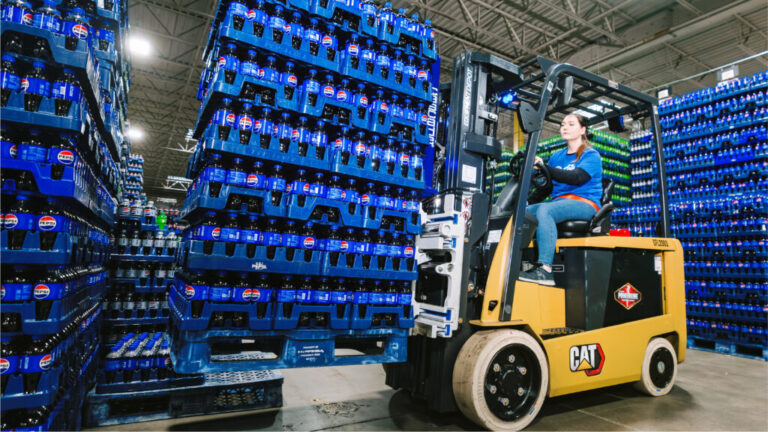
Professional exporters commonly prepare shipments using:
- quality pallets
- stretch wrapping
- corner protection
- pallet labels
- stable stacking
- weight balancing
- secure loading
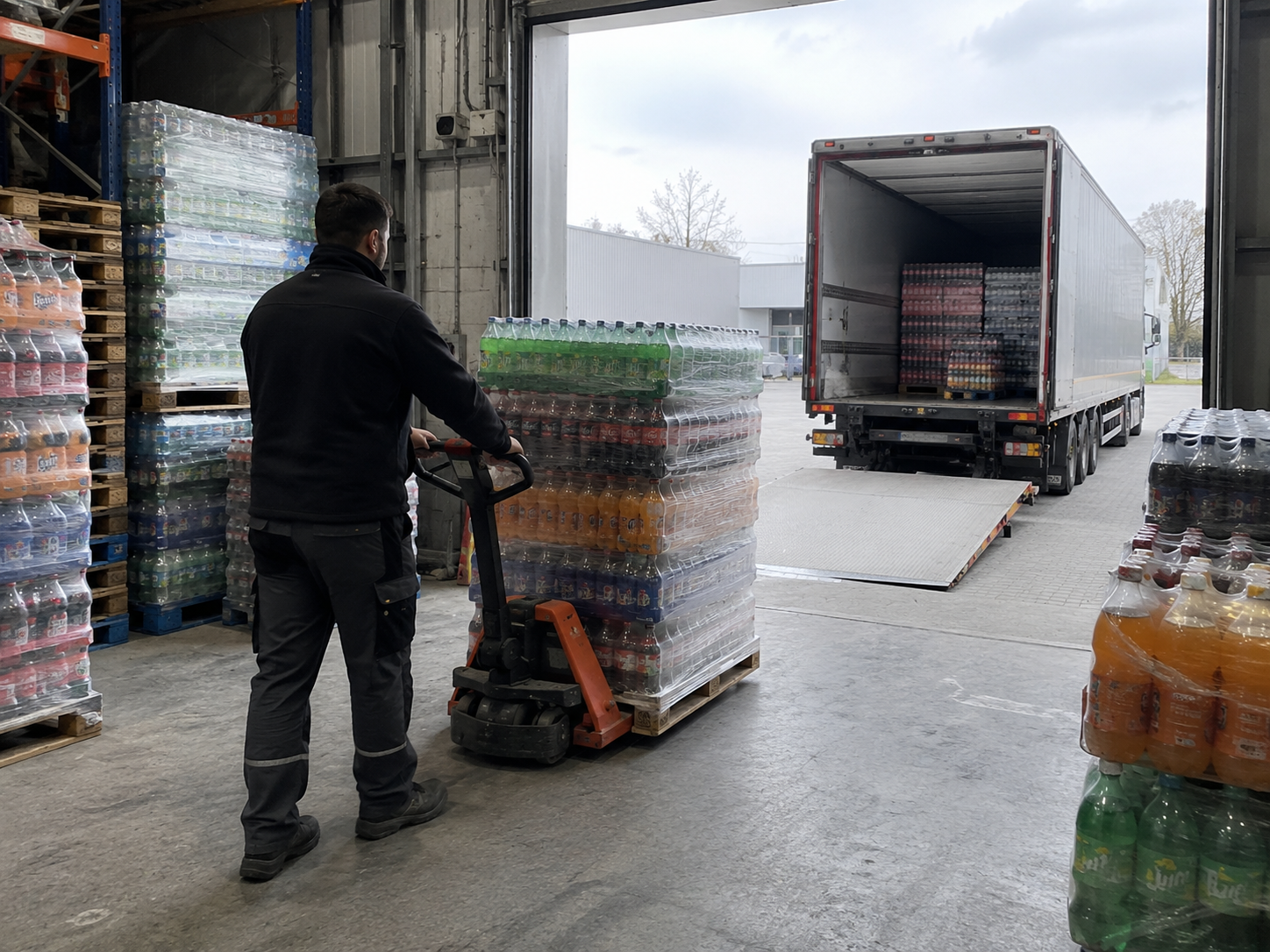
Many exporters also photograph completed pallets before dispatch to document shipment condition.
Upon arrival, buyers should inspect:
- pallet count
- packaging condition
- visible damage
- product quantities
- best-before dates
- batch numbers
Any discrepancies should be documented immediately with photographs before unloading is completed.
Payment Terms
Payment arrangements vary according to supplier relationships and order values.
Common methods include:
- Bank Transfer (T/T)
- Deposit with balance before shipment
- Letter of Credit
- Documentary Collection
- Open Account (existing customers)
Before making payment, buyers should verify:
- company registration
- invoice details
- bank beneficiary
- quotation accuracy
- agreed products
- shipment terms
Unexpected changes to bank account details should always be confirmed through an independent communication channel.
Practical Example
A distributor in France requests:
- Four pallets
- Coca-Cola 330ml
- Sprite 330ml
- Pepsi 330ml
- Fanta Orange 330ml
The exporter:
- Confirms inventory.
- Verifies pallet quantities.
- Issues a wholesale quotation.
- Agrees on FCA Leipzig.
- Prepares mixed pallets.
- Generates commercial documentation.
- Coordinates transportation.
- Loads the shipment.
- Provides dispatch confirmation.
- Shares transport documentation.
The importer:
- arranges the main transportation
- completes customs requirements where applicable
- receives the shipment
- inspects pallet condition
- records inventory
- distributes products to customers
This structured workflow reduces misunderstandings and supports efficient international beverage procurement.
Explore our Coca-Cola 330ml Wholesale guide for pallet quantities, bulk purchasing, supplier selection, and delivery planning.
7. Frequently Asked Questions
1. What does a European beverage exporter do?
A European beverage exporter supplies beverages from European markets to commercial buyers in other countries. Depending on the agreement, the exporter may source products, prepare pallets, coordinate transportation, issue export documentation, and work with freight forwarders to support international deliveries.
2. Which businesses typically buy from a European beverage exporter?
Typical customers include:
- Importers
- Beverage wholesalers
- Retail chains
- Supermarkets
- Convenience stores
- Hospitality businesses
- Food service distributors
- Online beverage retailers
These buyers generally purchase products in pallet, truckload, or container quantities for resale rather than personal consumption.
3. What beverages can be exported from Europe?
The available product range depends on the supplier and destination market but commonly includes:
- Carbonated soft drinks
- Energy drinks
- Bottled water
- Fruit juices
- Juice drinks
- Functional beverages
- Sports drinks
- Mixers
- Sparkling beverages
Product availability, packaging formats and brand variants may vary depending on warehouse stock and market demand.
4. What documents are required when importing beverages?
The required documentation depends on the destination country and shipment terms. Common documents include:
- Commercial Invoice
- Packing List
- Transport Document (CMR, Bill of Lading or Air Waybill)
- Export Declaration
- Certificate of Origin (when applicable)
- Insurance Certificate (if included under the agreed Incoterm®)
- Product specifications
Importers should always confirm local customs and food regulatory requirements before placing an order.
5. What is the difference between a mixed pallet and a full pallet?
A full pallet contains one product throughout the pallet, making storage and handling more efficient.
A mixed pallet combines multiple products or flavours on a single pallet, allowing buyers to increase product variety while purchasing smaller quantities of each item.
The most suitable option depends on inventory strategy, customer demand and warehouse operations.
6. Which transportation method is best for beverage exports?
The most appropriate transport method depends on shipment size, destination and delivery timeline.
- Road freight is commonly used for European deliveries.
- Sea freight is generally more economical for international container shipments.
- Rail freight may be suitable for specific trade corridors.
- Air freight is usually reserved for urgent or high-value shipments due to higher costs.
Many exporters use multimodal transport, combining several transport methods within one shipment.
7. How do I choose a reliable European beverage exporter?
Before placing an order, verify:
- Company registration
- Business address
- VAT details where applicable
- Product specifications
- Available inventory
- Remaining shelf life
- Export experience
- Documentation process
- Payment instructions
- Delivery terms
A professional exporter should also provide clear quotations, accurate documentation and transparent communication throughout the transaction.
8. What should be included in a wholesale beverage quotation?
A comprehensive quotation should include:
- Supplier information
- Buyer information
- Product descriptions
- Packaging format
- Quantity
- Cases per pallet
- Unit prices
- Freight charges
- Incoterm®
- Payment terms
- Estimated dispatch time
- Quotation validity
This information enables buyers to compare suppliers accurately and calculate the total landed cost.
9. Why is shelf life important when purchasing beverages?
Remaining shelf life affects inventory planning, retail distribution and customer satisfaction.
Businesses purchasing large quantities should confirm the available best-before dates before shipment to ensure sufficient time for transportation, warehousing and resale.
10. Can a European beverage exporter ship internationally?
Many European beverage exporters supply customers throughout Europe and selected international markets.
The available destinations depend on factors such as:
- Import regulations
- Trade restrictions
- Shipping routes
- Product availability
- Carrier services
- Local customs requirements
Buyers should always verify that the products can be legally imported and sold in their destination country.
11. How is the total landed cost calculated?
The landed cost includes more than the wholesale product price. Buyers should consider:
- Product value
- Export packaging
- Freight charges
- Cargo insurance
- Customs duties
- Import taxes
- Customs clearance fees
- Inland transportation
- Local delivery costs
Calculating the total landed cost helps businesses determine accurate resale pricing and profit margins.
12. Why do many importers source beverages from Europe?
European suppliers often provide access to established beverage brands, efficient logistics networks, and consolidated wholesale purchasing.
Working with an experienced exporter can simplify procurement, improve supply chain planning, and support long-term inventory management when combined with appropriate documentation and transportation arrangements.
Conclusion
Selecting the right European beverage exporter involves much more than comparing wholesale prices. A dependable export partner contributes to the efficiency of the entire supply chain by providing accurate quotations, well-prepared pallets, transparent communication, and documentation that supports smooth international trade.
Businesses importing beverages should evaluate suppliers based on operational capability, product traceability, export experience and logistics coordination—not simply on the lowest price available. Understanding pallet configurations, Incoterms, transport options, customs documentation and landed costs allows importers to make informed purchasing decisions while reducing operational risk.
As international beverage markets continue to evolve, companies that build relationships with reliable exporters are better positioned to maintain product availability, respond to changing consumer demand and expand into new markets with greater confidence.
Whether you are sourcing carbonated soft drinks, energy drinks, bottled water or mixed beverage pallets, careful planning and supplier verification remain essential to successful international procurement.
Call to Action
Looking for a reliable European beverage exporter for your business?
Juicy GmbH supplies wholesale soft drinks and beverages to importers, distributors, wholesalers, supermarkets and hospitality businesses across international markets. Our team can assist with product availability, pallet configurations, export documentation and logistics coordination to help streamline your procurement process.
Whether you require full pallets, mixed pallets or container-load quantities, we are here to support your sourcing needs with professional service and transparent communication.