Table of Contents
Introduction
Finding a dependable Sprite Lemon Lime Wholesale supplier requires more than identifying the lowest advertised price. Commercial buyers must also consider product format, stock availability, remaining shelf life, pallet configuration, delivery terms, documentation, labelling, supplier reliability, and the total landed cost.
Sprite is an established lemon-lime carbonated soft drink sold across supermarkets, convenience stores, restaurants, vending channels, hotels, events, and wholesale distribution networks. The Coca-Cola Company describes Sprite as its globally established lemon-lime soft drink, known for its crisp taste and strong carbonation. Buyers who need official brand information can review the official Sprite brand page.
Strong consumer recognition can make Sprite commercially relevant for businesses seeking a familiar soft-drink brand with broad resale potential. However, successful bulk purchasing depends on choosing the correct format and building an order around actual demand rather than brand recognition alone.
This guide explains how Sprite wholesale purchasing works, which businesses typically buy it, what to verify before ordering, how quotations should be compared, and how to reduce avoidable procurement and logistics problems.
What Is Sprite Lemon Lime Wholesale?
Sprite Lemon Lime Wholesale refers to the commercial purchase of Sprite in quantities intended for resale, distribution, hospitality service, catering, vending, or institutional use.
Instead of buying individual cans or bottles from a retailer, a wholesale buyer may order:
- Full cases
- Single-product pallets
- Mixed-format pallets
- Mixed-brand pallets
- Multiple pallets
- Full truckloads
- Less-than-container-load shipments
- Full shipping containers
The most suitable order structure depends on the buyer’s sales volume, destination, warehouse capacity, customer demand, and available working capital.
A small convenience-store distributor may prefer a few pallets of fast-moving cans. A national importer may require full truckloads or containers. A hospitality supplier may need several package sizes to serve hotels, restaurants, cafés, and event customers.
Businesses currently evaluating available Sprite formats can review the dedicated Sprite wholesale distributor page for pallet-based sourcing and quotation information.
Who Buys Sprite in Bulk?
Sprite wholesale orders support several commercial channels.
Supermarkets and grocery retailers
Supermarkets require reliable stock availability because recognised soft-drink brands often occupy permanent shelf and refrigerated-display space.
Retail buyers may purchase individual cans, multipacks, medium-sized PET bottles, and larger family bottles depending on their customer profile.
Convenience stores
Convenience stores typically prioritise portable, single-serve products that customers can consume immediately.
Common choices include:
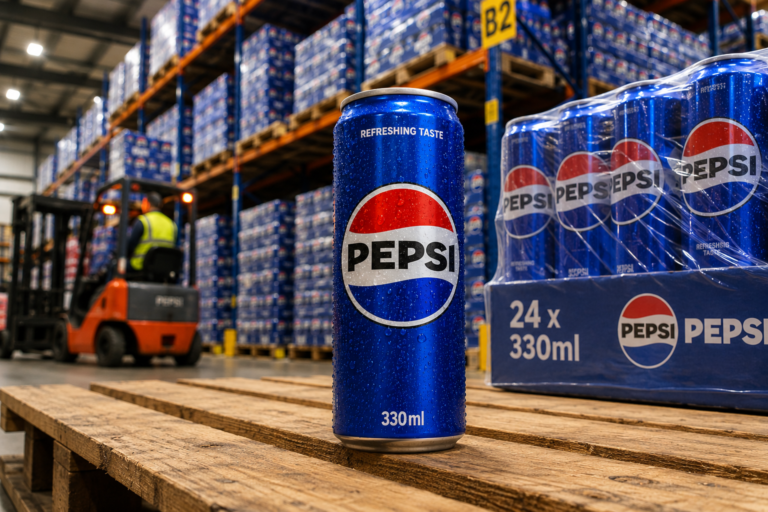
- 330 ml cans
- 500 ml PET bottles
- Refrigerated multipacks
- Small-format bottles
The most appropriate format depends on store location, shopper behaviour, refrigeration capacity, and local pricing expectations.
Beverage distributors
Distributors purchase drinks in bulk and resell them to smaller retailers, hospitality operators, independent shops, restaurants, and local wholesalers.
For these buyers, a Sprite order must be evaluated alongside:
- Delivery density
- Customer order frequency
- Case turnover
- Warehouse capacity
- Route profitability
- Brand assortment
Hotels, restaurants and cafés
Hospitality businesses use Sprite as a standalone soft drink and as part of their broader non-alcoholic beverage offering.
Smaller cans can support portion control, while PET bottles may be suitable for casual dining, takeaway service, room service, group bookings, or catering.
Vending operators
Vending operators need compact products that fit their machines and sell consistently.
Before purchasing Sprite cans for vending use, the operator should verify:
- Can dimensions
- Machine compatibility
- Selling price
- Product rotation
- Refrigeration performance
- Expected demand at each site
Event and catering businesses
Catering companies, festivals, sports venues, conferences, and private-event suppliers may require large quantities within a short delivery window.
These buyers should confirm inventory and delivery arrangements well before the event date rather than relying on last-minute stock availability.
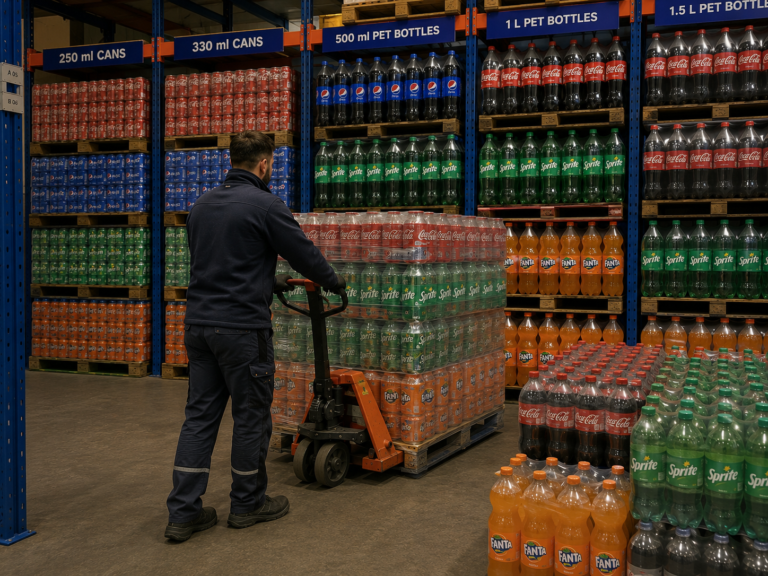
Common Sprite Wholesale Packaging Formats
Sprite may be supplied in different sizes and packaging structures depending on the production market and current wholesale availability.
| Format | Common commercial use | Main advantage |
|---|---|---|
| 250 ml can | Hospitality, events and vending | Compact single serving |
| 330 ml can | Retail, wholesale and convenience | Familiar high-turnover format |
| 500 ml PET bottle | Convenience and takeaway | Portable and resealable |
| 1 L PET bottle | Grocery and food service | Suitable for sharing |
| 1.5 L PET bottle | Supermarkets and household retail | Family-size format |
| Multipack | Supermarkets and cash-and-carry | Supports multi-unit purchasing |
This table is a general buying guide, not a fixed inventory list. Exact formats, case counts, packaging language, and pallet quantities should always be confirmed in the supplier’s quotation.
Why format selection matters
The cheapest case is not automatically the most profitable product.
A buyer should consider:
- Which size customers request most frequently
- How much shelf or refrigerator space is available
- Whether the product suits vending, retail, wholesale, or hospitality
- How quickly each format is likely to sell
- Whether slower formats could tie up working capital
- Whether packaging is suitable for the destination market
A carefully selected product mix usually performs better than purchasing several formats without a clear sales plan.
Full Pallets Versus Mixed Pallets
One of the most important purchasing decisions is whether to order full single-product pallets or mixed pallets.
Full Sprite pallets
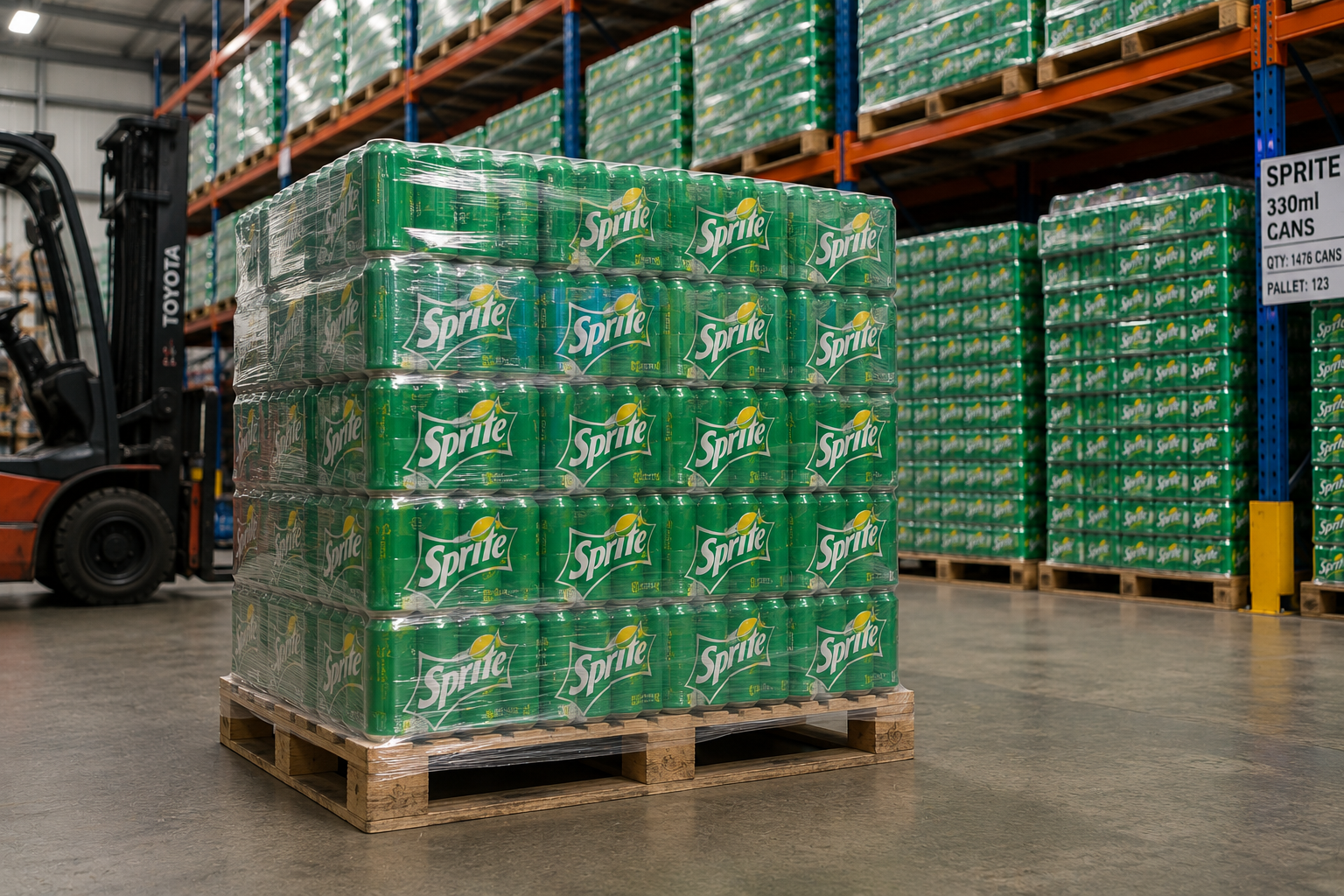
A full pallet normally contains one product format or SKU, such as Sprite 330 ml cans.
This option can offer:
- Easier stock counting
- Faster warehouse handling
- Simplified picking
- Consistent case dimensions
- Better suitability for high-volume resale
- Potentially lower handling costs
Full pallets are generally appropriate when the buyer already has predictable demand for the selected format.
Mixed beverage pallets
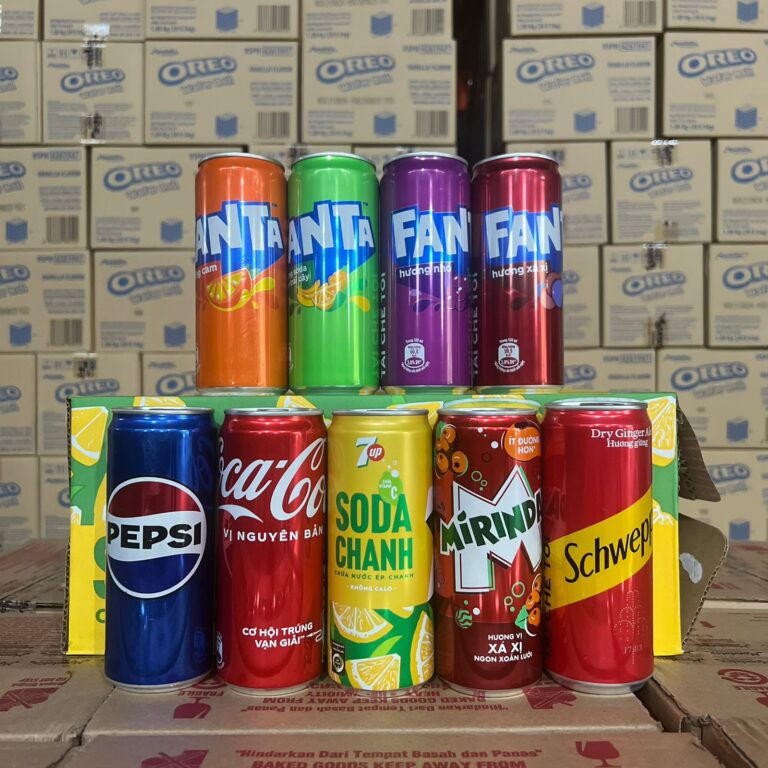
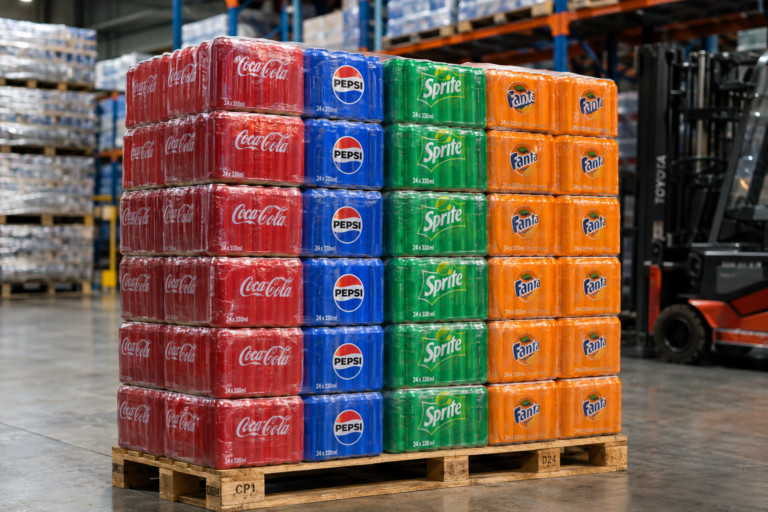
A mixed pallet combines different products, brands, formats, or flavours within an agreed pallet structure.
For example, a buyer may request a combination of:
- Sprite
- Coca-Cola
- Fanta
- Pepsi
- Selected package sizes
Mixed pallets can help smaller businesses offer greater variety without committing to a full pallet of every SKU.
They may also support:
- Product testing
- Broader retail selection
- Lower inventory exposure per item
- More efficient use of limited warehouse space
- Faster market entry
However, mixed pallets can require additional picking, verification, wrapping, labelling, and handling. Buyers should ask whether mixing fees or minimum case quantities apply.
For a wider view of available branded products, buyers can explore the company’s soft drinks wholesale range before deciding whether a single-brand or mixed-brand order is more suitable.
How Sprite Wholesale Pricing Is Calculated
There is rarely one universal Sprite wholesale price applicable to every buyer and destination.
A commercial quotation may be affected by:
- Product size
- Package material
- Units per case
- Cases per pallet
- Number of pallets
- Current stock origin
- Remaining shelf life
- Packaging language
- Seasonal availability
- Transport distance
- Fuel and freight conditions
- Delivery terms
- Destination taxes and import charges
- Pallet preparation requirements
This is why buyers should be cautious about comparing two quotations using only the case price.
Compare total landed cost
The total landed cost represents the amount required to move the goods from the supplier to the buyer’s agreed location.
Depending on the transaction, it may include:
- Product value
- Pallet costs
- Handling
- Loading
- Freight
- Cargo insurance
- Customs clearance
- Import duty
- VAT or local taxes
- Port or terminal charges
- Final-mile delivery
A quotation with a lower product price may become more expensive after transport and destination costs are included.
Simple landed-cost calculation
A basic calculation can be structured as:
Product cost + transport + insurance + customs charges + taxes + local delivery = total landed cost
The buyer can then divide the total landed cost by the number of cases or units to estimate the true cost per case or unit.
Information to Include in a Wholesale Enquiry
A vague request such as “Send me your Sprite price” may not provide enough information for an accurate quotation.
A complete enquiry should include:
- Company name
- Buyer’s full name
- Business email and telephone number
- Required Sprite format
- Number of cases or pallets
- Delivery country
- Full delivery city or postcode
- Preferred delivery terms
- Required delivery date
- VAT, tax or company-registration details where applicable
- Whether mixed products are required
- Any packaging or labelling requirements
Providing this information at the beginning reduces unnecessary messages and helps the supplier calculate product and logistics costs more accurately.
How to Evaluate a Sprite Wholesale Supplier
Price is important, but it should not be the only supplier-selection criterion.
Confirm the supplier’s business identity
Before making a large payment, buyers should verify the supplier’s:
- Registered company name
- Business address
- Contact information
- Commercial documentation
- Bank-account beneficiary
- Quotation details
- Invoice details
The beneficiary named on the payment instructions should be consistent with the agreed commercial documentation or clearly explained.
Request a complete quotation
A professional quotation should identify:
- Product name
- Package size
- Units per case
- Number of cases
- Cases per pallet
- Number of pallets
- Unit or case price
- Total product value
- Freight charges
- Delivery destination
- Delivery terms
- Payment terms
- Quote validity
- Estimated dispatch or delivery schedule
Missing information should be clarified before payment.
Confirm remaining shelf life
Soft drinks are date-sensitive FMCG products. Buyers should verify the minimum remaining shelf life at dispatch or delivery.
This is especially important for:
- Long-distance sea freight
- Slow-moving formats
- Large container orders
- Products intended for redistribution
- Markets with strict retailer acceptance periods
A product can be genuine and undamaged but still be commercially unsuitable if too little selling time remains.
Review packaging and labelling
The buyer should confirm whether the product packaging is appropriate for the destination market.
Important details may include:
- Product language
- Ingredient declaration
- Nutrition information
- Allergen information where applicable
- Barcode
- Deposit or recycling markings
- Country-specific labels
- Date coding
- Case markings
Import requirements can differ between countries. The buyer remains responsible for confirming that the product can legally be imported and sold in the destination market.
Ask about traceability
Reliable batch and product identification can support stock control, recalls, inventory visibility, and supply-chain accountability.
The GS1 traceability framework explains how standardised identification and data-sharing systems can improve supply-chain safety, visibility, and efficiency.
Ask the supplier which product, case, pallet, batch, or shipment identifiers will be available.
Understanding Delivery Terms
International quotations should state which party is responsible for transportation, risk, customs procedures, and destination charges.
Terms such as EXW, FCA, CPT, CIP, DAP, and DDP should not be treated as interchangeable.
The International Chamber of Commerce publishes the official Incoterms rules, which clarify important buyer and seller responsibilities in domestic and international goods transactions.
Questions to ask about the delivery term
Before approving an order, confirm:
- Where delivery legally takes place
- When risk transfers to the buyer
- Who selects and pays the carrier
- Who arranges cargo insurance
- Who manages export clearance
- Who manages import clearance
- Who pays duties and taxes
- Whether final delivery is included
- Whether unloading is included
This prevents a buyer from assuming that a quoted freight amount includes services that remain their responsibility.
Road, Sea and Consolidated Transport
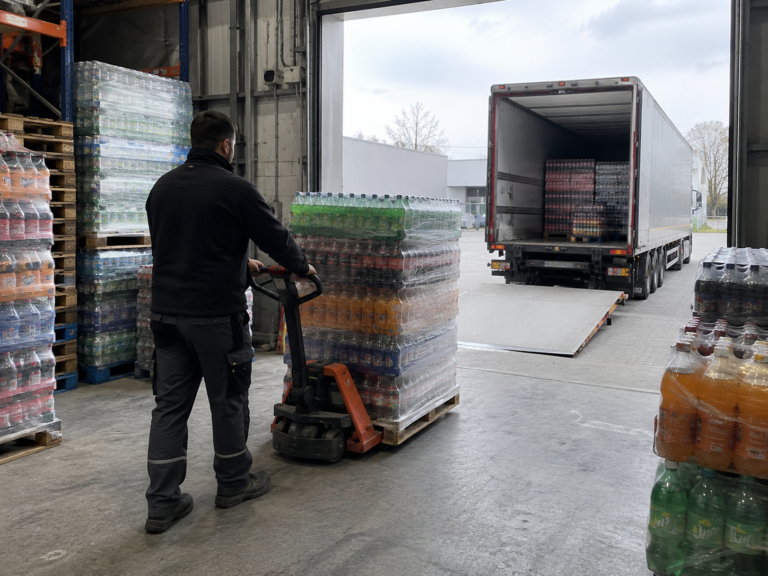
Road freight
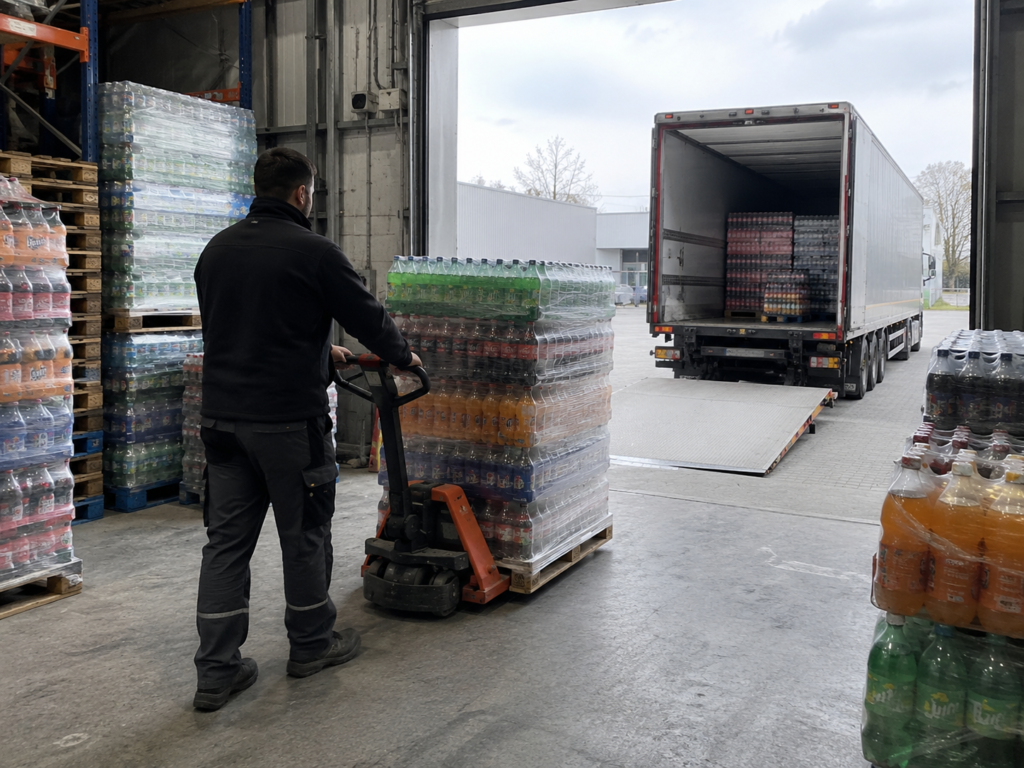
Road freight is commonly used for pallet and truckload deliveries within Europe.
It can support:
- Direct warehouse delivery
- Flexible pallet quantities
- Shorter regional lead times
- Full truckload shipments
- Less-than-truckload shipments
The buyer should confirm whether the quoted rate includes tail-lift delivery, delivery appointments, unloading, or restricted-access surcharges.
Sea freight
Sea freight is generally more suitable for high-volume international orders and distant destinations.
Possible structures include:
- Full container load
- Less-than-container load
- Port-to-port service
- Door-to-port service
- Door-to-door service
A lower sea-freight rate does not necessarily mean a lower final cost. Port handling, customs clearance, documentation, storage, demurrage, and inland delivery can substantially affect the final amount.
Consolidated shipments
Consolidation allows cargo from different orders or suppliers to share transport capacity.
This may reduce freight costs for smaller orders, but it can involve:
- Longer handling times
- More transfer points
- Additional consolidation charges
- Less control over departure schedules
- Greater documentation coordination
The buyer should compare consolidation savings against the required delivery speed.
Customs and Import Preparation
Cross-border beverage purchasing requires preparation before the goods leave the warehouse.
Importers should verify:
- Product classification
- Customs value
- Origin documentation
- Import duties
- VAT or sales tax
- Product labelling rules
- Food and beverage regulations
- Deposit-return requirements
- Customs-entry documentation
- Import licences, where required
The European Commission’s Access2Markets portal provides tools for checking trade conditions, tariffs, rules of origin, and other requirements relevant to EU trade.
Because regulations depend on the origin, destination, and product classification, buyers should seek qualified customs or regulatory guidance for their specific shipment.
Stock Rotation and Warehouse Planning
Ordering too much inventory can be as damaging as ordering too little.
A practical Sprite stock plan should consider:
- Average weekly sales
- Seasonal demand
- Existing inventory
- Expected delivery time
- Safety stock
- Promotional activity
- Available storage capacity
- Remaining shelf life
Apply first-expired, first-out principles
Date-sensitive stock should normally be managed so that products with the earliest suitable expiry or best-before date are distributed first.
Warehouse teams should record:
- Date of receipt
- Product format
- Batch information
- Best-before date
- Pallet location
- Quantity received
- Quantity dispatched
Good rotation helps prevent newer stock from being sold while older inventory remains in storage.
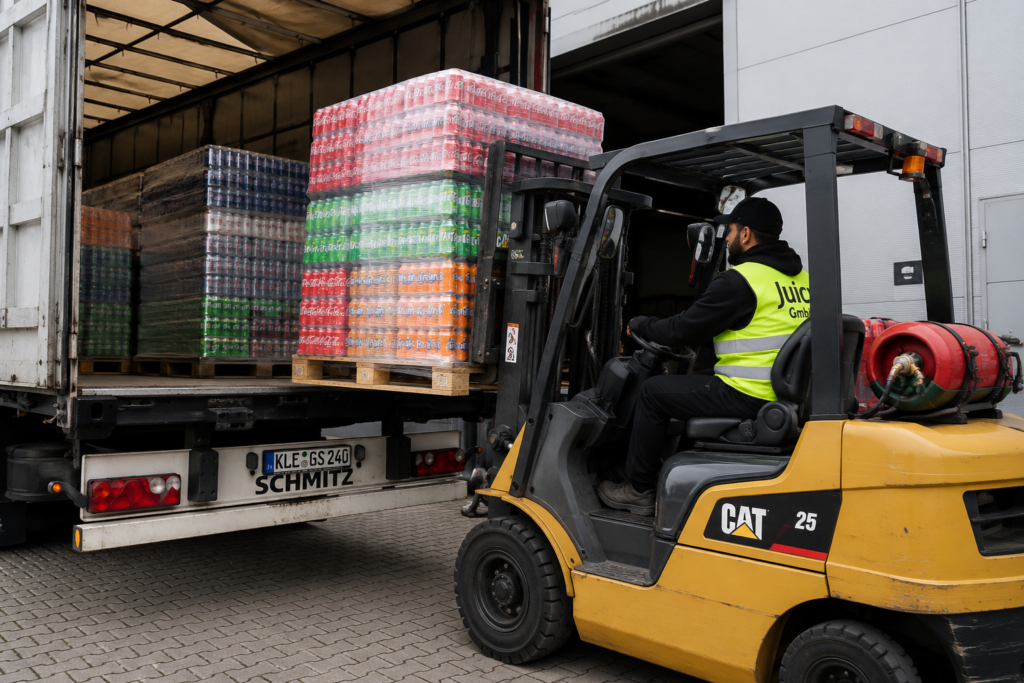
Protect products during storage
Carbonated drinks should be stored in a clean, dry environment and protected from unsuitable temperatures, direct sunlight, contamination, and physical damage.
Pallets should remain stable and should not be overloaded or stacked beyond safe operational limits.
Common Sprite Wholesale Buying Mistakes
1. Comparing only the case price
The cheapest case price may exclude freight, customs, handling, taxes, or final delivery.
Always compare the total landed cost.
2. Ordering without confirming the exact format
“Sprite cans” is not sufficiently precise.
Confirm the volume, units per case, case type, pallet count, and packaging market.
3. Ignoring remaining shelf life
A low-priced shipment may become difficult to resell if the remaining commercial life is too short.
4. Assuming all pallets have the same case count
Cases per pallet can vary by format, packaging origin, pallet dimensions, and stacking arrangement.
Use the quantities stated in the quotation.
5. Failing to confirm delivery responsibilities
Buyers sometimes assume customs clearance, duty, unloading, or final delivery is included when it is not.
Confirm the agreed delivery term in writing.
6. Purchasing too many slow-moving formats
A wide selection may look attractive but can increase storage pressure and reduce cash flow.
Prioritise products supported by real customer demand.
7. Placing urgent orders too late
Transport availability and wholesale inventory can change. Buyers should plan around replenishment lead times instead of waiting until stock is nearly exhausted.
Practical Sprite Wholesale Buyer Checklist
Use this checklist before approving a wholesale order:
| Requirement | What to confirm |
|---|---|
| Product | Exact Sprite variant and format |
| Case configuration | Units in each case |
| Pallet structure | Cases on each pallet |
| Quantity | Total cases and pallets |
| Shelf life | Minimum remaining period |
| Packaging | Language, barcode and market |
| Price | Cost per case and total value |
| Freight | Transport cost and service level |
| Delivery term | Buyer and seller responsibilities |
| Destination costs | Duties, taxes and clearance |
| Documentation | Invoice, packing list and required certificates |
| Payment | Beneficiary, currency and deadline |
| Lead time | Estimated dispatch and delivery |
| Claims process | Procedure for shortage or damage |
Frequently Asked Questions
1. Where can businesses buy Sprite Lemon Lime Wholesale?
Businesses can buy Sprite from beverage wholesalers, distributors, exporters, and B2B suppliers offering case, pallet, truckload, or container quantities.
The buyer should evaluate stock availability, packaging, shelf life, delivery terms, documentation, and supplier reliability before ordering.
2. Can Sprite be purchased by the pallet?
Yes. Sprite is commonly traded in pallet quantities.
The exact number of cases on a pallet depends on the can or bottle size, packaging configuration, and pallet structure. Buyers should use the quantities confirmed in the commercial quotation rather than assuming a standard count.
3. What is the minimum order for Sprite wholesale?
Minimum-order quantities vary by supplier, product format, destination, and delivery method.
Some suppliers may accept one or several pallets, while larger export orders may require a full truck or shipping container.
4. Is Sprite available in mixed soft-drink pallets?
Mixed-pallet availability depends on the supplier.
A mixed order may combine Sprite with Coca-Cola, Fanta, Pepsi, or other available products. Buyers should confirm minimum cases per SKU and any additional preparation charges.
5. Which Sprite format is best for retail?
The best format depends on the retail channel.
Single-serve cans and PET bottles are commonly suited to convenience retail, while larger bottles and multipacks may perform better in supermarkets and household shopping environments.
6. How is the Sprite wholesale price calculated?
The price depends on the format, case configuration, quantity, stock origin, shelf life, destination, freight, handling requirements, and delivery terms.
A current quotation is more reliable than a fixed online price.
7. Can Sprite wholesale orders be delivered internationally?
International delivery may be available depending on the supplier’s market coverage, product availability, order size, destination regulations, and logistics arrangements.
Importers must verify customs, tax, labelling, and product-compliance requirements.
8. What information is needed for a Sprite quotation?
Provide the exact product format, required quantity, company name, delivery country, delivery postcode or city, preferred delivery terms, and any mixed-pallet or labelling requirements.
9. How can buyers verify the total cost?
Ask for a written breakdown covering product value, freight, insurance where applicable, customs responsibilities, taxes, local charges, and final delivery.
Then calculate the landed cost per case or unit.
10. Why is remaining shelf life important?
Remaining shelf life determines how much time the buyer has to transport, store, distribute, and sell the product.
Long-distance importers and distributors generally require enough commercial life to serve downstream customers without excessive discounting or waste.
11. Are full pallets better than mixed pallets?
Full pallets are often more efficient for high-volume, predictable demand. Mixed pallets can be better for smaller buyers testing several products or serving customers who require variety.
The right option depends on sales volume, storage space, and purchasing budget.
12. What should buyers check when the delivery arrives?
Check the pallet count, case quantities, product format, packaging condition, batch information, date codes, seals, and visible damage.
Any discrepancy should be documented promptly with photographs and reported according to the agreed claims procedure.
Conclusion
Choosing the right Sprite Lemon Lime Wholesale arrangement involves more than negotiating a low case price.
Professional buyers should evaluate the complete supply structure, including:
- Product format
- Case and pallet configuration
- Remaining shelf life
- Packaging language
- Order quantity
- Supplier documentation
- Delivery responsibilities
- Import requirements
- Freight costs
- Total landed cost
Full pallets can provide efficient handling for established demand, while mixed pallets may help smaller distributors and retailers offer a wider assortment with less exposure to individual products.
Clear communication is essential. Buyers should provide complete order and destination information, request a detailed quotation, verify commercial documents, and confirm all delivery responsibilities before payment.
Ready to source Sprite for retail, wholesale, hospitality, vending, or distribution?
Request a Sprite wholesale quotation with your preferred format, quantity, company information, and delivery destination. Providing complete order details will help the sales team confirm availability and prepare an accurate commercial offer.