Table of Contents
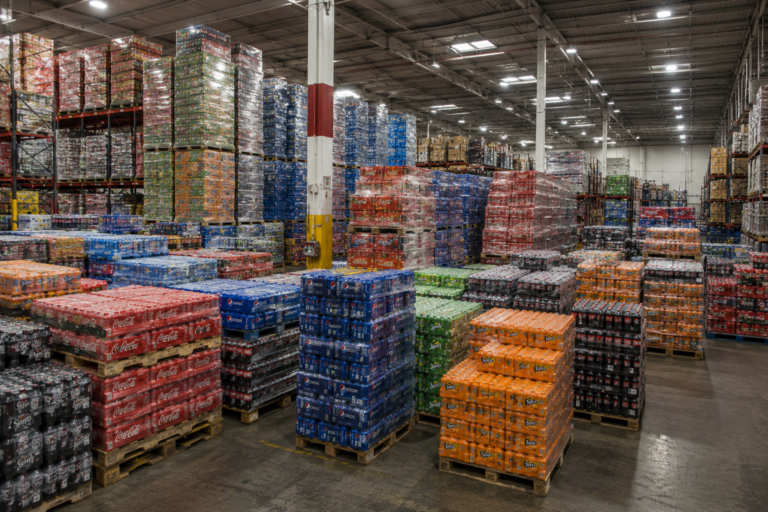
Germany is a major European manufacturing, distribution, and logistics market. Its central location provides access to extensive road, rail, and seaport networks, making it a practical sourcing point for businesses purchasing beverages for European and international markets.
However, learning how to import soft drinks from Germany involves more than finding a supplier and comparing case prices. Importers must identify suitable products, verify the seller, understand pallet specifications, calculate landed costs, select appropriate delivery terms, and comply with the rules of the destination country.
Missing one of these steps can lead to customs delays, unexpected charges, unsuitable product labels, short shelf life, or goods that cannot legally be sold after arrival.
This guide explains the complete process for wholesalers, retailers, distributors, supermarkets, convenience stores and hospitality businesses sourcing soft drinks from Germany.
Why Import Soft Drinks from Germany?
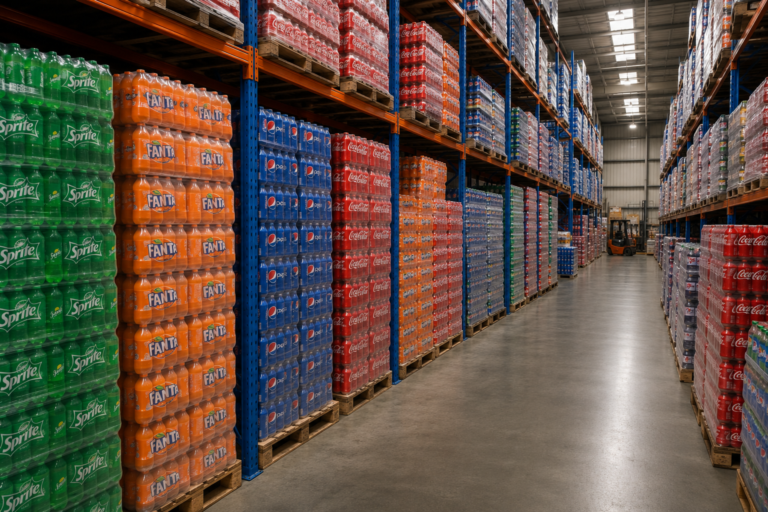
Germany is well positioned for the distribution of fast-moving consumer goods throughout Europe and to international markets.
Businesses may source beverages from Germany to obtain:
- Branded European soft drinks
- Full beverage pallets
- Mixed product pallets
- Wholesale quantities for resale
- Centralized sourcing across several brands
- Road delivery to European destinations
- Container shipping to international markets
- Commercial export documentation
- Long-term wholesale supply arrangements
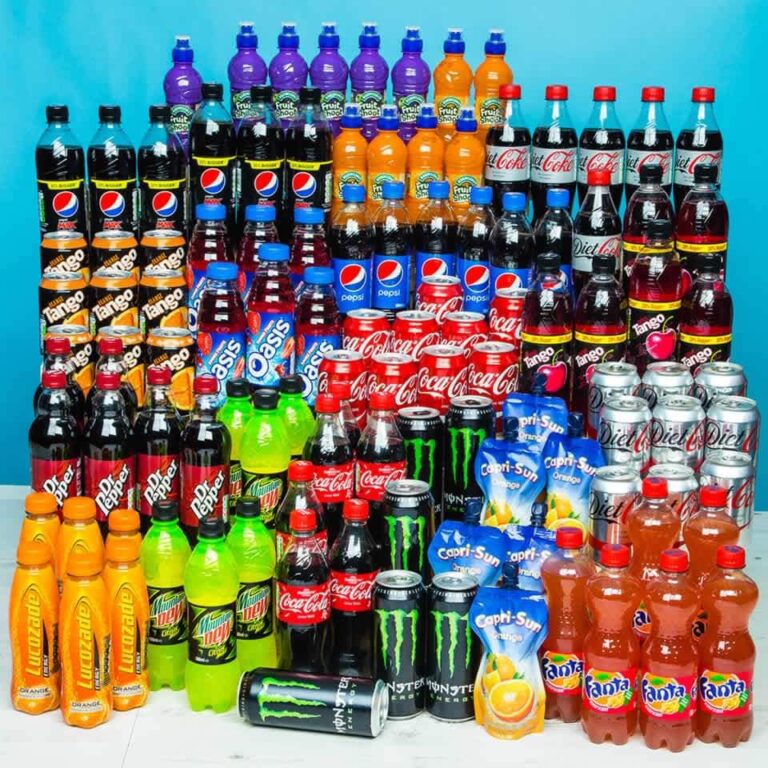
Commonly requested products include carbonated soft drinks, energy drinks, bottled water, juices, and other non-alcoholic beverages.
The commercial advantage depends on more than product availability. The supplier must also be able to prepare the goods correctly, issue appropriate documents, and coordinate with the carrier or freight forwarder.
Who Can Import Soft Drinks from Germany?
Wholesale beverage suppliers generally work with registered businesses rather than individual consumers.
Typical customers include:
- Beverage wholesalers
- Import and export companies
- Supermarket operators
- Independent retailers
- Convenience-store chains
- Cash-and-carry businesses
- Hotels and restaurants
- Catering companies
- Vending operators
- Online retailers
- Regional distributors
- Hospitality procurement companies
Before requesting a quotation, determine how much stock your business can finance, transport, store and sell within the product’s remaining shelf life.
A large order may reduce the cost per case, but it can also tie up working capital and create inventory risk when demand has not been tested.
Step 1: Define Your Product Requirements
A supplier needs an exact purchasing specification before it can prepare an accurate quotation.
Your request should state:
- Product brand
- Product flavour or version
- Can or bottle size
- Number of units per case
- Number of cases
- Number of pallets
- Delivery country
- Delivery city, warehouse or seaport
- Preferred delivery term
- Required delivery period
- Company information
- VAT or tax details, where applicable
For example, requesting “Coca-Cola wholesale” is too broad.
A more useful request would be:
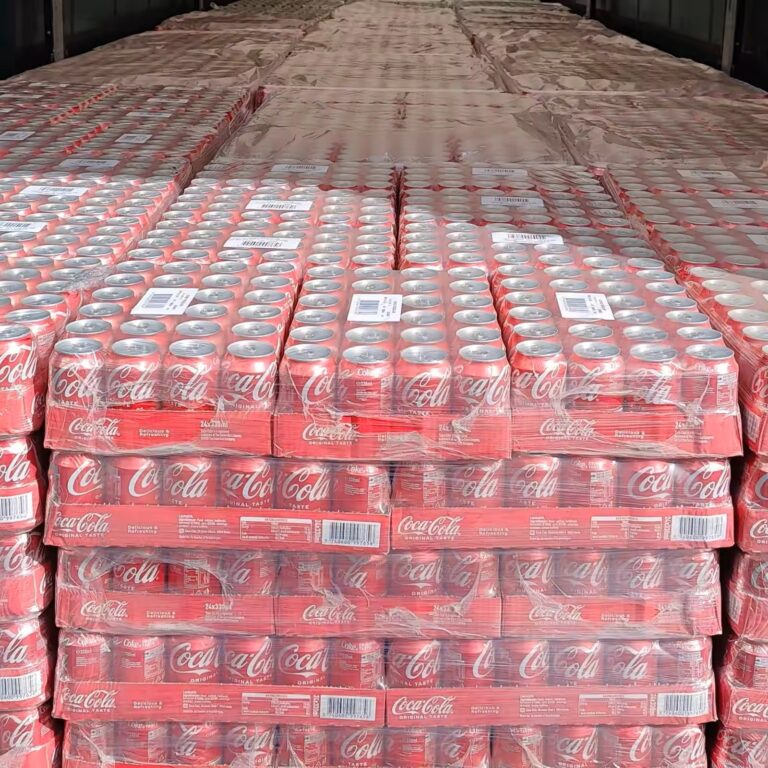
Coca-Cola Original Taste, 330ml cans, 24 cans per case, three full pallets for delivery to Lyon, France.
This allows the supplier to verify the correct stock, packaging configuration, pallet capacity and transport cost.
Step 2: Choose Between Full and Mixed Pallets
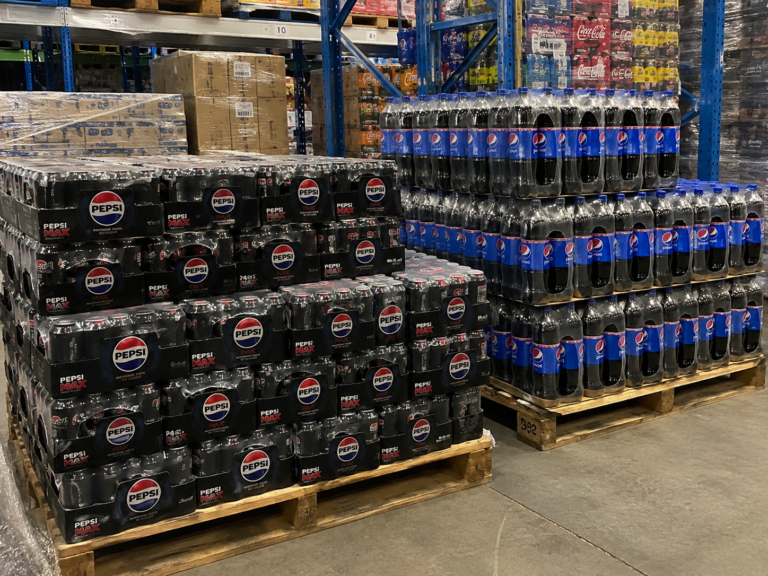
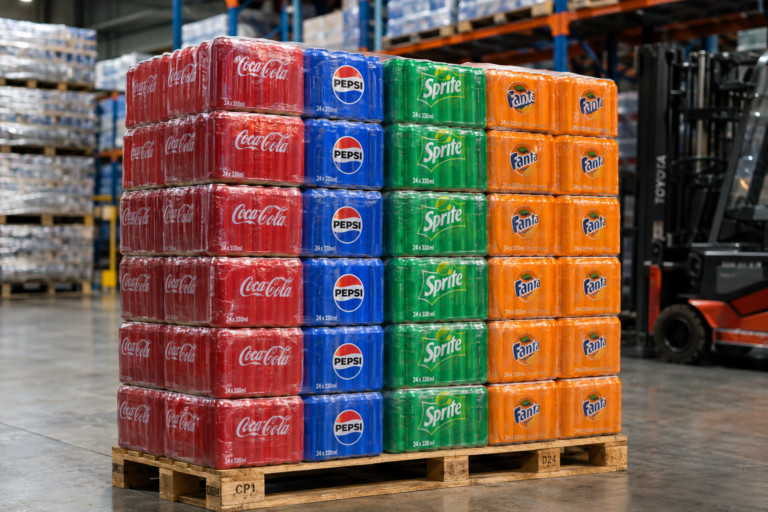
A full pallet normally contains one product, package size and flavour. A mixed pallet combines several products within one pallet or shipment.
Full pallets
Full pallets are suitable when demand for a particular product is already established.
Advantages include:
- Easier warehouse handling
- Consistent case dimensions
- Faster loading and unloading
- Simpler stock control
- Reduced picking requirements
- Clear product identification
- Easier order reconciliation
Mixed pallets
Mixed pallets may be appropriate for retailers and distributors testing several products or serving customers with different preferences.
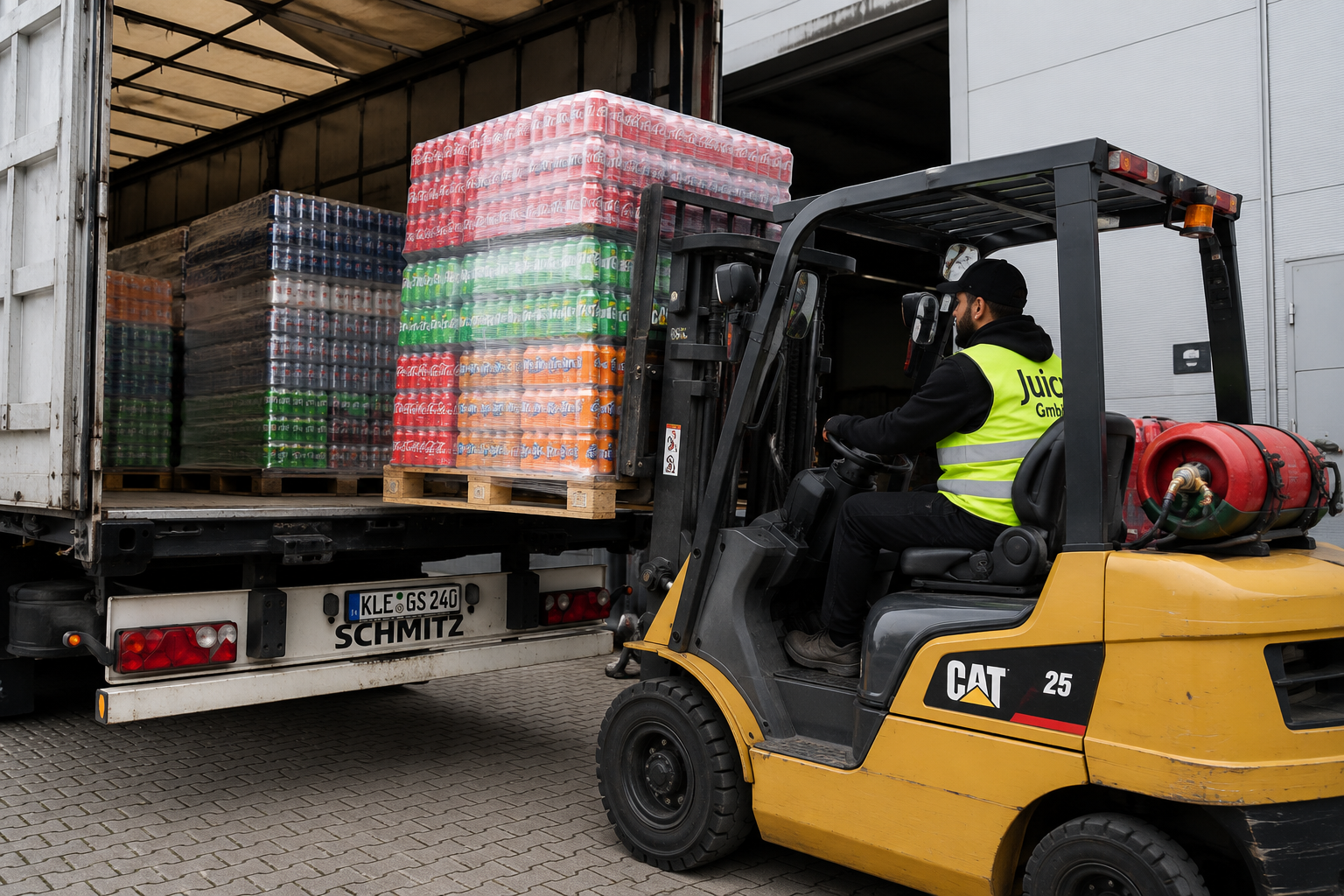
A mixed order might contain:
- Coca-Cola Original Taste
- Coca-Cola Zero Sugar
- Fanta Orange
- Sprite
- Pepsi
- Pepsi Max
- Energy drinks
- Bottled water
Mixed pallets provide flexibility, but they may involve additional picking, labelling, and pallet-building costs.
Before placing the order, ask:
- Is mixed-pallet preparation available?
- What is the minimum quantity per product?
- Is there a handling surcharge?
- Will products be separated and clearly labelled?
- Does the mixed configuration affect pallet stability?
- Will the preparation increase the dispatch time?
Businesses evaluating this option can read the related guide to Mixed Pallet Distribution before choosing their final configuration.
Step 3: Find a Reliable German Beverage Supplier
Supplier verification is one of the most important steps in the importing process.
A professional-looking website does not prove that a company has the inventory or operational capacity to complete your order.
Verify the company information
Check or request the following:
- Registered legal name
- Business address
- Company registration information
- VAT identification number, where applicable
- Official telephone number
- Company-domain email address
- Product catalogue
- Formal quotation
- Proforma invoice
- Available delivery terms
- Warehouse or fulfilment information
The business name shown on the quotation, invoice and bank account should be consistent. Any unexplained difference should be resolved before payment.
Ask operational questions
A legitimate supplier should be able to answer practical questions such as:
- Is the stock physically available?
- What is the minimum order quantity?
- How many cases are loaded on each pallet?
- What are the pallet dimensions?
- What is the gross pallet weight?
- What is the remaining shelf life?
- Which market version is being supplied?
- Are mixed pallets available?
- Which export documents are included?
- Who arranges transportation?
- Is cargo insurance included?
- How are shortages or damaged goods handled?
These questions help distinguish an experienced wholesale supplier from a company that only collects enquiries without controlling stock or fulfilment.
Step 4: Confirm Product Specifications and Traceability
Soft drink importers should verify that the products are genuine, correctly described and traceable through the supply chain.
Request information covering:
- Exact product name
- Brand and variant
- Manufacturer or responsible food business
- Can or bottle size
- Units per case
- Barcode or GTIN
- Batch or lot number
- Best-before date
- Country or market version
- Pallet identification
- Storage instructions
The GS1 Global Traceability Standard provides a framework that businesses can use when designing and implementing supply-chain traceability systems.
GS1 identification standards can support the tracking of products, cases and logistics units as they move between manufacturers, wholesalers, carriers and retailers.
For larger shipments, pallet-level identification is useful because it allows the receiving business to connect an individual pallet to its products, batches and shipping records.
Traceability becomes especially important when:
- A product must be located by batch
- Several retailers receive stock from the same shipment
- A shortage or damage claim is raised
- The importer must investigate a product complaint
- A supplier or manufacturer issues a recall notice
Step 5: Check Shelf Life Before Purchasing
Best-before dates should be confirmed before the order is approved.
Do not rely on broad statements such as “long expiry.” Request the actual best-before date or a written minimum remaining shelf-life commitment.
Consider the time required for:
- Order preparation
- Export clearance
- International transit
- Import clearance
- Local delivery
- Warehouse storage
- Distribution to retailers
- Final consumer sale
For example, a product with nine months of remaining shelf life may appear acceptable at the supplier’s warehouse. However, after transport, customs clearance and distribution, the retailer may have considerably less time to sell it.
Establish a minimum shelf-life requirement in writing, particularly for large or recurring orders.
Step 6: Review Product Labelling and Packaging
A product that can legally be sold in Germany is not automatically suitable for every destination market.
Different countries may impose rules relating to:
- Product name
- Ingredient declaration
- Nutrition information
- Allergen information
- Language
- Net quantity
- Importer details
- Country of origin
- Sweetener statements
- Caffeine warnings
- Recycling information
- Deposit markings
- Packaging-waste obligations
- Local tax or registration labels
The European Commission’s labelling and packaging guidance explains that EU-wide requirements may apply, while additional conditions can exist in individual destination countries.
Importers should check the requirements of the country where the drinks will actually be sold.
For non-EU markets, consult:
- The destination customs authority
- The national food-safety authority
- The standards agency
- A customs broker
- A qualified regulatory consultant
The supplier may provide product and export documents, but the contract should clearly state who is responsible for confirming that the goods can legally enter and be placed on the destination market.
Step 7: Request a Detailed Wholesale Quotation
A professional quotation should contain enough detail for the buyer to understand exactly what is being purchased and which costs are included.
It should identify:
- Seller and buyer
- Quotation number
- Issue date
- Validity period
- Product description
- Package size
- Units per case
- Cases per pallet
- Number of pallets
- Unit price
- Product subtotal
- Pallet or packaging charges
- Freight cost
- Insurance cost, where applicable
- Taxes, where applicable
- Currency
- Delivery term
- Named delivery place
- Payment conditions
- Estimated preparation period
- Estimated transport period
Avoid accepting a single unexplained total.
Product value, freight, insurance and additional charges should be separated wherever possible. This allows the buyer to compare offers accurately and identify which costs may still be payable at the destination.
Step 8: Calculate the Total Landed Cost
The cheapest wholesale case price does not always result in the lowest final cost.
The landed cost is the total amount spent before the goods are available at the buyer’s receiving location.
Common landed-cost components
| Cost component | What it covers |
|---|---|
| Product price | Purchase value of the beverages |
| Export packaging | Pallets, wrapping, labels and protection |
| Warehouse handling | Picking, consolidation and loading |
| Inland transport | Warehouse-to-terminal or warehouse-to-port movement |
| Export clearance | Export declaration and customs processing |
| International freight | Road, sea, rail or multimodal transport |
| Cargo insurance | Protection against covered transport losses |
| Destination handling | Port, terminal or warehouse charges |
| Customs duty | Tariff imposed by the importing country |
| Import VAT or tax | Destination-country taxation |
| Customs broker | Clearance and declaration services |
| Local delivery | Terminal-to-warehouse transportation |
| Banking costs | Transfer and currency-conversion charges |
Use the following calculation:
Total landed cost = product value + packaging + freight + insurance + customs charges + taxes + clearance + local delivery
Then calculate:
Landed cost per case = total landed cost ÷ total cases
This is the figure that should be used when setting resale prices and calculating gross margin.
Example
Assume that an importer buys 360 cases of soft drinks.
- Product value: €2,160
- Packaging and handling: €120
- Freight: €600
- Insurance: €40
- Customs and clearance: €250
- Local delivery: €130
The total landed cost would be:
€2,160 + €120 + €600 + €40 + €250 + €130 = €3,300
The landed cost per case would be:
€3,300 ÷ 360 = €9.17 per case
This calculation is more useful than evaluating the €6 product price alone.
Step 9: Choose the Correct Incoterm
Incoterms® clarify important responsibilities between the seller and buyer, including delivery, transport costs, risk transfer and certain customs obligations.
The International Chamber of Commerce publishes the official Incoterms® 2020 rules. The current edition contains 11 trade rules designed to help buyers and sellers define their respective responsibilities.
Common Incoterms® used in beverage trade
| Rule | General application |
|---|---|
| EXW | Goods are made available at the seller’s premises |
| FCA | Seller delivers to the buyer’s nominated carrier |
| CPT | Seller pays carriage to the named destination |
| CIP | Seller pays carriage and arranges specified insurance |
| FOB | Seller loads goods aboard a nominated vessel |
| CFR | Seller pays sea freight to the destination port |
| CIF | Seller pays sea freight and specified insurance |
| DAP | Seller delivers to the named destination ready for unloading |
| DDP | Seller assumes extensive delivery and import obligations |
Always include the named place
An Incoterm should not appear alone.
Instead of writing:
FCA
Write:
FCA Seller’s Warehouse, Leipzig, Germany, Incoterms® 2020
The precise location is important because it identifies where delivery takes place and can affect the transfer of costs and risks.
Do not confuse freight payment with risk transfer
Under some Incoterms®, the seller pays transportation to a destination even though the risk transfers to the buyer earlier in the journey.
The ICC explains that Incoterms® define responsibilities between the buyer and seller but do not replace the complete sales contract. Payment conditions, product quality, title transfer and dispute resolution must be addressed separately.
Buyers should therefore understand both:
- Who pays each transport cost
- Where the risk transfers
Step 10: Prepare the Required Documents
The exact documents depend on whether the goods remain within the EU or are exported to a non-EU country.
A beverage shipment may require:
- Commercial invoice
- Packing list
- Transport document
- Export declaration
- Certificate of origin
- Preferential origin evidence
- Insurance certificate
- Product specification
- Import permit
- Customs declaration
- Delivery note
- Proof of payment
Commercial invoice
The commercial invoice should generally contain:
- Seller details
- Buyer details
- Invoice number and date
- Product description
- Quantity
- Unit value
- Total value
- Currency
- Origin information
- Gross and net weight
- Incoterm and named place
- Payment conditions
The product description should be sufficiently specific for customs purposes.
“Soft drinks” may be too broad. A clearer description could identify the product as non-alcoholic carbonated beverages in 330ml cans, packed 24 units per case.
Packing list
A packing list explains how the goods are physically arranged.
The European Commission’s packing-list glossary describes it as a document identifying how export goods are packed, including information such as contents, weight, volume and package dimensions.
A beverage packing list may include:
- Total cases
- Total pallets
- Units per case
- Net weight
- Gross weight
- Pallet dimensions
- Product references
- Batch information
- Pallet numbers
Transport documents
The transport document depends on the shipping method:
- CMR consignment note for international road freight
- Bill of lading for sea freight
- Sea waybill where appropriate
- Air waybill for air freight
- Rail consignment note
- Multimodal transport document
Step 11: Understand Export Declarations and EORI Numbers
Goods leaving the EU customs territory may require an export declaration through the appropriate electronic customs system.
German Customs publishes official guidance on export and exit procedures through its AES business guidance.
What is an EORI number?
An EORI number is used to identify economic operators in EU customs processes.
German Customs explains that the Economic Operators Registration and Identification number is valid throughout the European Union and is used in customs-related activities.
Whether a particular buyer, seller, carrier or representative needs an EORI number depends on its role in the customs transaction.
Confirm this with:
- German Customs
- Your freight forwarder
- Your customs broker
- The customs representative submitting the declaration
Do not assume that another company’s EORI registration automatically covers your responsibilities.
Step 12: Classify the Products Correctly
Customs classification affects:
- Tariff rates
- Import taxes
- Required documents
- Restrictions
- Statistical reporting
- Customs declarations
Soft drinks may be classified differently depending on:
- Ingredients
- Sugar content
- Sweeteners
- Juice content
- Carbonation
- Alcohol content
- Product composition
- Packaging
- Intended use
German Customs provides official information about the customs tariff and commodity codes. It notes that commodity codes are required in customs declarations, although the required number of digits can differ between import and export processes.
Do not copy a commodity code from an unrelated invoice. Confirm that the code matches the actual beverage and the customs system used by the destination country.
The European Commission’s Access2Markets platform provides information about tariffs, rules of origin, taxes, import procedures and product requirements for many markets.
Step 13: Check Rules of Origin
Country of dispatch and country of origin are not necessarily the same.
A beverage may be exported from a warehouse in Germany while having been manufactured in another country.
Origin can affect:
- Customs-duty rates
- Preferential tariff treatment
- Required evidence
- Trade-agreement eligibility
- Labelling
- Import restrictions
The European Commission’s guide to rules of origin explains how origin rules and supporting evidence are used in international trade.
Ask the supplier to distinguish between:
- Country of manufacture
- Country of origin for customs purposes
- Country of dispatch
- Warehouse location
Never assume that goods are of German origin simply because they are shipped from Germany.
Step 14: Arrange the Right Freight Method
The appropriate freight option depends on:
- Number of pallets
- Gross shipment weight
- Destination
- Delivery urgency
- Available budget
- Customs route
- Handling requirements
Road freight
Road transport is commonly used for deliveries within Germany and across Europe.
Possible options include:
- Groupage
- Less Than Truck Load
- Full Truck Load
- Dedicated vehicle
- Multistop distribution
Groupage can be suitable for smaller orders, but pallets may pass through several terminals. This can increase handling and the possibility of packaging damage.
Full truckloads are generally more practical for large shipments because they require less consolidation.
Sea freight
Sea freight may be used for long-distance and non-European destinations.
Options include:
- Less than Container Load
- Full Container Load
- Port-to-port
- Door-to-port
- Door-to-door
When comparing sea-freight quotations, check whether the offer includes:
- Origin handling
- Documentation
- Export clearance
- Ocean freight
- Destination terminal charges
- Customs clearance
- Port storage
- Demurrage
- Local delivery
- Container unloading or return
A low ocean-freight price can become expensive when destination charges are excluded.
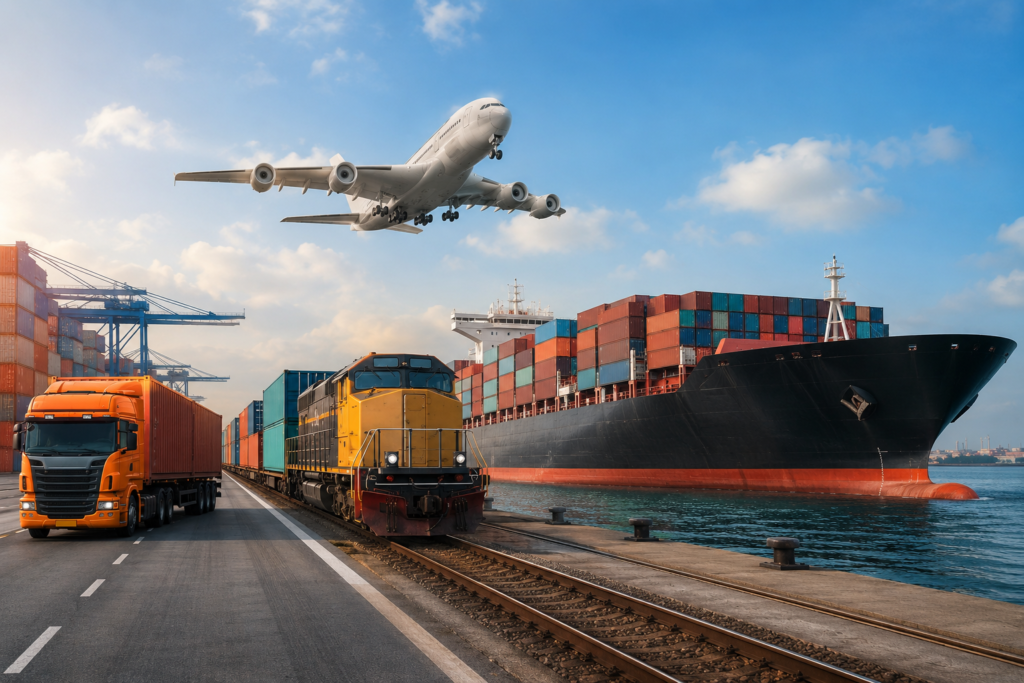
Multimodal transport
Some shipments travel:
- By truck from the supplier’s warehouse
- By rail or sea for the main journey
- By truck from the terminal to the buyer
The selected Incoterm and freight quotation should reflect the complete movement.
Step 15: Protect Pallets During Loading and Transport
Soft drink cargo is heavy. Poorly prepared pallets can shift, collapse or suffer case damage during transport.
Suitable preparation may include:
- Strong pallets
- Even case stacking
- Secure stretch wrapping
- Corner protection
- Anti-slip sheets
- Strapping where appropriate
- Clear pallet labels
- Load restraints
- Dry and clean transport equipment
- Correct weight distribution
Ask for loading photographs when appropriate.
The photographs should show:
- Pallet condition
- Product quantity
- Wrapping
- Vehicle interior
- Pallet position
- Truck or container number
- Seal number, where applicable
These records can help if the receiving business later reports missing or damaged goods.
Step 16: Arrange Cargo Insurance
Carrier liability is not identical to comprehensive cargo insurance.
Compensation under transport conventions or carrier contracts may be limited by shipment weight, liability conditions or the cause of the damage. The commercial value of the goods may not always be recovered in full.
Confirm:
- Whether insurance is included
- Who arranges it
- The insured value
- Covered risks
- Deductible or excess
- Exclusions
- Geographical limits
- Claims procedure
- Required evidence
- Whether freight and duties are included
Under CIP and CIF, the seller arranges insurance, but buyers should still review the level of protection provided.
Do not assume that the words “insured shipment” guarantee reimbursement for every form of damage, delay or loss.
Step 17: Use Secure Payment Terms
Wholesale beverage orders can involve significant advance payments.
Before transferring money, obtain:
- Formal quotation
- Proforma invoice
- Seller’s legal information
- Confirmed product specifications
- Pallet quantities
- Payment schedule
- Delivery term
- Dispatch estimate
- Bank-account information
- Cancellation conditions
- Claims procedure
Possible payment methods include:
- Advance bank transfer
- Deposit and balance payment
- Documentary collection
- Letter of credit
- Open account for established customers
The appropriate arrangement depends on:
- Order value
- Relationship history
- Credit risk
- Supplier policy
- Buyer policy
- Country risk
Treat unexplained last-minute changes to bank details with caution. Verify any change through a previously confirmed telephone number or trusted contact channel.
Step 18: Complete Destination Customs Clearance
For shipments entering a non-EU country, the importer or its appointed customs broker normally completes import clearance unless the sales agreement allocates the responsibility differently.
Customs may request:
- Importer registration
- Commercial invoice
- Packing list
- Transport document
- Commodity code
- Origin evidence
- Import permit
- Product specification
- Customs declaration
- Proof of value
- Duty and tax payment
The buyer should estimate these charges before placing the order.
Do not wait until the goods reach the port or border to investigate import requirements. Delays can create:
- Port storage fees
- Demurrage
- Inspection expenses
- Re-export costs
- Product deterioration
- Missed customer deliveries
EU and Non-EU Soft Drink Imports
| Issue | Movement within the EU | Export outside the EU |
|---|---|---|
| Border customs clearance | Generally not required for ordinary Union goods | Usually required |
| Export declaration | Generally not used for ordinary intra-EU movement | Commonly required |
| Customs duty | Generally not charged on Union goods moving within the EU | May apply at destination |
| VAT | Intra-EU VAT rules may apply | Export and destination import rules may apply |
| Labelling | EU rules plus national requirements | Destination-country requirements |
| Transport | Commonly road freight | Road, sea, rail, air or multimodal |
| Origin evidence | Sometimes commercially requested | May affect duty or trade preferences |
| Import registration | Depends on the transaction | Often required |
This is a general overview. Customs, VAT and product rules should be confirmed for the specific countries and companies involved.
Practical Import Example
Consider a wholesaler purchasing four pallets of canned soft drinks from a German supplier for delivery outside the EU.
The process
- The buyer identifies the products, quantities and package sizes.
- The supplier confirms stock and pallet specifications.
- The buyer verifies the supplier’s legal and banking information.
- The supplier issues a detailed quotation.
- The parties agree on the Incoterm and named place.
- The buyer checks destination labelling and import requirements.
- A customs broker confirms the commodity code and estimated charges.
- The parties agree on payment conditions.
- The supplier prepares and labels the pallets.
- The carrier collects the shipment.
- The export declaration is completed where required.
- The buyer receives the transport documents.
- The destination broker prepares import clearance.
- Duties and taxes are paid.
- The shipment is released and delivered.
- The buyer inspects the products and records the batches.
Every stage should have a responsible party and supporting document.
Common Mistakes When Importing Soft Drinks
Comparing only the product price
A low wholesale price can become expensive after transport, taxes, customs and destination charges are added.
Ignoring label compliance
The beverages may be genuine but unsuitable for sale in the destination market without relabelling.
Accepting an incomplete Incoterm
Terms such as “CIF” or “DAP” should include the precise named port or delivery location.
Confusing freight cost with transit risk
The party paying the freight may not be the party carrying the transport risk throughout the journey.
Failing to verify pallet quantities
Incorrect case counts, dimensions or weights can affect freight capacity and landed cost.
Ignoring remaining shelf life
Short-dated stock may not provide enough time for import clearance, distribution and retail sale.
Sending payment without verifying the seller
Company details, beneficiary information and commercial documents should be checked first.
Assuming destination charges are included
Port, terminal, customs, handling and local delivery charges may remain payable by the buyer.
Importing before checking taxes
Some destinations impose sugar taxes, packaging levies, environmental charges or beverage-specific fees.
Buying more than the market can absorb
Slow-moving inventory ties up capital and increases the possibility of expiry or discounting.
Wholesale Quotation Checklist
| Question | Confirmed? |
|---|---|
| Is the supplier’s legal identity clear? | Yes/No |
| Are the exact products listed? | Yes/No |
| Are the can or bottle sizes stated? | Yes/No |
| Are units per case confirmed? | Yes/No |
| Are cases per pallet confirmed? | Yes/No |
| Is the best-before date confirmed? | Yes/No |
| Is the gross shipment weight stated? | Yes/No |
| Is the Incoterm complete? | Yes/No |
| Is the delivery location precise? | Yes/No |
| Are freight and insurance explained? | Yes/No |
| Are destination charges identified? | Yes/No |
| Are payment terms written clearly? | Yes/No |
| Are the documents listed? | Yes/No |
| Is the dispatch estimate realistic? | Yes/No |
| Is the claims procedure explained? | Yes/No |
Ask for a corrected quotation when important information is missing.
How to Build a Long-Term Supplier Relationship
The first order should be used to assess more than product quality.
Evaluate:
- Communication
- Stock accuracy
- Pallet preparation
- Documentation
- Dispatch performance
- Delivery condition
- Response time
- Claims handling
- Price consistency
- Shelf-life consistency
For repeat orders, establish written standards covering:
- Approved products
- Minimum shelf life
- Pallet configurations
- Order deadlines
- Delivery windows
- Acceptable substitutions
- Price-review procedures
- Required documents
- Claims deadlines
- Responsible contacts
Sharing realistic purchasing forecasts can also help the supplier plan stock. A forecast should not be treated as a confirmed order unless the parties explicitly agree.
Businesses comparing full and mixed beverage orders can review our guide to Pallet Soft Drink Suppliers in Europe to understand pallet configurations, supplier requirements, and cross-border distribution options.
7. FAQ Section
1. How do I import soft drinks from Germany?
Identify the products and quantities you need, verify a German supplier, request a detailed quotation, calculate your landed cost and check the destination’s labelling and import rules. You must then agree on an Incoterm, arrange freight and prepare the required customs documents.
2. Can businesses buy soft drinks directly from German wholesalers?
Yes. German beverage wholesalers may supply registered retailers, distributors, importers, supermarkets and hospitality businesses. Acceptance depends on the supplier’s minimum order quantity, customer-verification process and delivery coverage.
3. What is the minimum order for wholesale soft drinks?
Minimum quantities vary. Some suppliers accept a few full or mixed pallets, while others require a full truckload or container. Ask for the minimum quantity per product and for the complete order.
4. Which documents are needed to import soft drinks?
Common documents include a commercial invoice, packing list and transport document. Non-EU exports may also require an export declaration, origin evidence, insurance certificate, product information and destination-country import documents.
5. Do I need an EORI number?
An EORI number identifies economic operators involved in EU customs processes. Whether your business needs one depends on where it is established and its role in the declaration. Check the official German Customs EORI guidance or consult a customs broker.
6. Which Incoterm is best for beverage imports?
There is no single best option. FCA can be suitable when the buyer controls the main transport, while DAP can be convenient when the seller arranges delivery to a named destination. Review the official ICC Incoterms® 2020 guidance before agreeing on the term.
7. Can I import mixed pallets?
Yes, when the supplier offers mixed-pallet preparation. Confirm the available brands, minimum quantity per product, additional handling charges, and final cases per pallet.
8. How much does importing soft drinks from Germany cost?
The cost depends on the product value, number of pallets, shipment weight, destination, freight mode, insurance, Incoterm, customs duty, import tax, clearance and local delivery.
9. Are customs duties charged on soft drinks from Germany?
Customs duties may apply when the goods enter a non-EU country. The rate depends on classification, origin, destination and any applicable trade agreement. Use Access2Markets and confirm the result with a customs professional.
10. How long does international beverage delivery take?
Delivery time depends on inventory availability, pallet preparation, distance, shipping method, carrier schedule and customs clearance. Ask the supplier to separate the order-preparation period from the estimated transport time.
11. How can I verify a German beverage supplier?
Check the legal company name, address, registration details, VAT information, official contact channels, bank beneficiary and commercial documents. Ask for clear stock, pallet and shelf-life information before making payment.
12. What should I inspect when the shipment arrives?
Check pallet quantities, product cases, packaging, seals, visible damage, moisture, batch numbers and best-before dates. Record shortages or damage on the delivery document and take photographs before unpacking the shipment.
8. Conclusion
Understanding how to import soft drinks from Germany requires structured planning across procurement, supplier verification, logistics, customs, compliance, payment and inventory management.
Begin with an exact product request. Confirm the case and pallet configuration, remaining shelf life and labelling. Verify the supplier’s legal and banking information before approving the quotation or transferring funds.
The final purchasing decision should be based on landed cost rather than product price alone. Freight, insurance, customs duty, taxes, clearance and local delivery can significantly change the cost of every case.
The delivery term must also be written correctly. Use the official ICC Incoterms® 2020 rules to understand how costs, delivery obligations and risks are divided between buyer and seller.
Importers should use European Commission Access2Markets, German Customs, GS1 traceability standards and the destination country’s authorities to confirm transaction-specific requirements.
When these steps are completed correctly, importing soft drinks from Germany can provide retailers, distributors and wholesalers with a dependable route to branded European beverage supplies.
9. CTA
Request a Wholesale Soft Drink Quotation
Looking for branded soft drinks in pallet quantities for your retail, wholesale, distribution or hospitality business?
Contact Juicy GmbH and provide:
- Company name
- Company address
- Delivery country and city
- Required brands
- Can or bottle sizes
- Number of pallets
- Preferred delivery term
- VAT or tax information, where applicable
Our sales team can review your requirements and prepare a tailored quotation based on product availability, order quantity, delivery destination, and shipping arrangement.
Request your wholesale beverage quotation and begin sourcing soft drinks from Germany.